To "save" health insurance, McKinsey proposed these three breakthrough paths.


editorial comment/note


For a long time, health insurance, represented by critical illness insurance, is one of the most important types of personal insurance market, one of the most important ways for agents to survive and insurance companies to save embedded value. At the same time, it is also one of the most recognized and accepted types in the market. Therefore, health insurance has also become the fastest growing insurance in the past 10 years, with a compound annual growth rate as high as 33%.


However, in 2021, especially after the old definition of critical illness insurance completely withdrew from the market, health insurance unexpectedly hit a rock. Although the growth rate of medical insurance represented by Huimin Insurance is still rapid, the critical illness insurance that contributed the most premiums quickly fell into a downturn and has continued to this day. According to industry exchange data, the growth rate of new single premiums of critical illness insurance has been below -30% since 2021.


People in the whole industry are thinking hard: whether from the insurance depth, density and other indicators, or from the expectations of social supervision for commercial health insurance, this market is far from saturated, but why can’t it be sold?


Mckinsey’s latest report, The Challenge and Breakage of Commercial Health Insurance in China (hereinafter referred to as "Report"), gives its own detailed answer to the problem of breaking the health insurance that the industry is most concerned about.


Mckinsey said in the Report that the commercial health insurance supported by policies has a broad growth space. The root cause of the current dilemma lies in the structural mismatch between the supply and demand sides, which makes it impossible to effectively stimulate market demand. At the same time, the core capacity building of insurance companies is still insufficient, which is also one of the important reasons for the dilemma.


Based on the above analysis, combined with the observation of typical systems and institutions in developed insurance markets in developing commercial health insurance, McKinsey finally pointed out three major directions for domestic insurance companies to break commercial health insurance:


Integration of medical insurance and raising value


Technology empowers and increases efficiency.


Multi-party cooperation to expand coverage
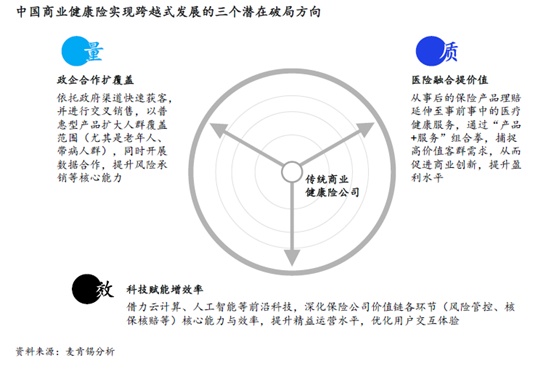


The following are the details extracted from the Report:


The present situation and predicament of commercial health insurance have different appearances and causes in different customer groups. At present, there are two main types of customers who buy commercial health insurance in the market: one is the customer who seeks the protection of medical expenses, and the other is the customer who pursues high-quality medical services. For the former, the most important function of commercial insurance is to hedge the risk of medical expenses and reduce the pressure of medical expenses; The latter is more inclined to obtain a better medical environment, better medical services and faster medical procedures by purchasing commercial insurance.


There are three main reasons for the insufficient development of health insurance for customers seeking medical expenditure protection:


1. From the demand side, the market demand of commercial health insurance in China has not been fully tapped. The overall cost of medical expenses is low, and the probability of catastrophic medical expenses is small, which leads to insufficient willingness and motivation of residents to purchase commercial insurance. At the same time, limited by market education, most residents lack due understanding of the coverage of basic medical insurance and the additional protection functions of commercial insurance.


2. From the perspective of supply and demand matching, the current market product supply cannot effectively stimulate potential demand. At present, there are many mismatches in mainstream health insurance products, such as "health care for healthy people does not guarantee non-standard", "medical insurance does not guarantee medical insurance outside" and "short-term insurance does not guarantee long-term", so it is often difficult for people who need the most protection to participate in insurance effectively.


3. From the supply side, in order to avoid the risk of compensation, the lack of core competence of insurance companies leads to their subjective screening of insurable people. Due to the short operation time of commercial health insurance, insufficient data accumulation and the insufficient development of medical service providers in China, insurance companies generally lack the core capabilities of deep integration with the medical service system, refined risk management and accurate capture of customer needs, which makes it difficult for them to develop products that stimulate market demand from the source.


For the customers who are pursuing high-quality medical services, although more and more residents are willing to pay for the upgrade of medical services, the number of such needs is still limited, which fails to effectively expand the scale of commercial medical insurance. The share of high-end medical services in the whole medical service market in China is less than 1%. The reason is that, from the perspective of ability to pay, high-income high-end medical consumers account for a low proportion of China’s total population; From the perspective of willingness to pay, the supply of high-end medical services in China is insufficient, and public hospitals are still the first choice for most residents to seek medical services.


In addition, some characteristics of China’s medical system have also brought challenges to the development of commercial insurance. For example, the insured population of basic medical insurance and the commercial insurance guarantee population overlap a lot, and the boundary of guarantee treatment is not clear; Medical service providers are mainly scattered public hospitals, and commercial insurance companies have limited influence on them; The foundation of medical and health data is relatively weak, and there is no integrated structured data platform.


In view of the above analysis, the Report finally gives insurance companies three solutions to promote the break of commercial health insurance:


Path one


Extending from the core diagnosis and treatment in an all-round way, exploring a new model of medical insurance integration


In the current medical ecology of China, commercial health insurance mainly plays a simple role as a payer, and most of the medical compensation resources are concentrated in the treatment link, which has not yet achieved the full health journey coverage of prevention in advance and management afterwards. At the same time, medical insurance settlement is often passive, and the participation in the formulation and implementation of medical service plans is low. In order to get rid of the dilemma of limited value creation and insufficient ecological impact, commercial health insurance companies should actively extend from today’s point layout horizontally along the patient’s health journey and vertically along the medical service network to create a "product+service" that runs through the whole medical life cycle.


Extend horizontally along the patient’s health journey to meet the needs of health services throughout the life cycle.


Health management services can create two types of value for insurance companies.


First, medical value: through professional, preventive and active intervention of sub-health and chronic patients, the risk of potential diseases can be effectively reduced, the disease progress can be delayed, and the compensation cost can be reasonably controlled;


Second, the value of service: by providing professional and service-oriented medical butler experience, we can meet and coordinate the health-related needs of customers (such as diet and drug use consultation), increase user contacts, and help customers get additional insurance. On this basis, health insurance companies can also interact with users regularly, screen and accumulate valuable health data of users throughout their life cycle, and create a starting point for subsequent product innovation and operational improvement.


Of course, from a global perspective, due to the differences in their own positioning, the core demands for value creation are naturally different.


The commercial insurance system in the United States is very mature, and the pressure of medical cost is mainly borne by insurance companies. Therefore, reducing the compensation cost is the most important appeal of insurance companies.


Considering that commercial insurance in the United States is mostly group insurance, it is difficult to achieve large-scale customer acquisition only by service value. As the most important payer, commercial insurance bears the main pressure of medical cost, so it becomes its fundamental appeal to help reduce the medical value of compensation. At the same time, the health insurance system with group insurance as the main body in the United States is difficult to get customers only by service value, but health management service, as a starting point to incite user stickiness and medication compliance, is conducive to the realization of medical value.


Throughout the American market, the emergence of chronic diseases and health management service companies such as Livongo and Omada has benefited many insurance companies. Their professional solutions can effectively improve the health status of patients and help insurance companies and employers save medical costs.


In Britain, Germany and Singapore, social security is the main body, and commercial insurance mainly plays a supplementary role. As the fundamental guarantee and main payer of residents’ medical needs, social security leads to the establishment of basic chronic disease management systems at the national level, relying on the public medical system (such as NHS chronic disease management plan in Britain and CDMP plan in Singapore).


In recent years, many countries with social security as the main body have launched innovative digital management schemes (such as Liva European government cooperation project), emphasizing the improvement of national health and reducing the overall medical expenditure. On the premise that the high-quality public system has fully guaranteed the medical value, commercial insurance, as an additional supplement, can focus on exploring the service value and take high-end management services as value-added items. For example, in order to meet the demands of different levels of customers for service value, Vitality has built a health management ecosystem, which permeates the daily life of members in all directions.


Professional health management services in China are in the initial stage, and the creation of medical value is not clear. All market players are trying to find a health and chronic disease management model suitable for China’s national conditions. Basic medical insurance in some areas is opening up chronic disease management funds, actively introducing professional chronic disease management solutions provided by commercial companies, systematically managing regional population health, and striving to improve people’s health status, save government medical insurance funds, and generate revenue from commercial companies’ services (such as provincial chronic disease management projects carried out by micro-medicine in Tianjin and Shandong).


Similarly, commercial insurance is also actively introducing medical ecological partners such as pharmaceutical machinery enterprises, sharing the cost of health management services based on the common goal of improving patients’ medication compliance, and improving the sustainability of model exploration. For example, Amway, a professional health service company, cooperated with JD.COM Allianz, Sanofi and other pharmaceutical companies to jointly launch "Zhen Ai Unlimited" diabetes insurance.


In view of the fact that China’s health insurance mainly focuses on C-end customers and the homogenization of insurance product design is serious, more and more insurance companies begin to explore differentiated value-added means from the perspective of health management, and strive to improve the ability of insurance companies to acquire customers and users. However, commercial insurance companies need to prioritize, pay attention to service value in the short term, and create differentiated competitive advantages. In the long term, they should actively explore medical value, reduce medical costs, expand the coverage of sick people, and achieve revenue growth.
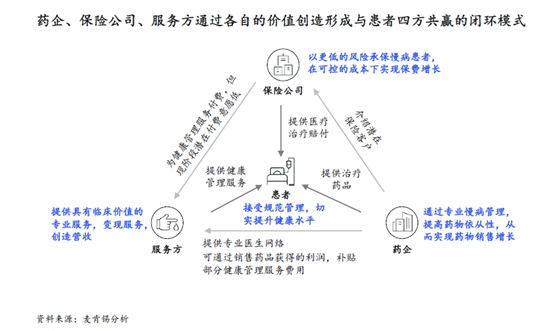


Specifically, insurance companies can extend forward and backward along the life cycle and diagnosis and treatment links of the insured, and build an end-to-end health management service system, including four aspects:


First, health management covers the whole cycle from health education, monitoring and evaluation to health intervention and tracking, such as diet, exercise and sleep management, so as to reduce the possibility and risk of illness;


Second, sub-health management, aiming at sub-health groups such as urban white-collar workers, comprehensively manages physiology and psychology, such as psychological counseling and TCM conditioning;


Third, the diagnosis and treatment of diseases, to create an all-round, multi-level and high-quality medical service system for the health needs of different customers in different scenarios;


Fourth, chronic disease management, including regular detection, continuous monitoring, evaluation and comprehensive intervention management of chronic diseases and risk factors, to speed up the recovery of diseases or reduce the risk of disease progression or recurrence.


In order to meet the health care and professional medical needs of users, insurance companies should focus on the core competence building in five areas:


1. Professional doctor team: As an important medical resource, professional doctors are responsible for users’ daily health status, regular diagnosis of common diseases, and meeting key medical needs such as treatment. Through online platforms and other tools, a highly accessible team of doctors can provide convenient medical services such as long-distance regular follow-up visits, interpretation of data indicators, and guidance on the dynamic adjustment of patients’ prescriptions.


2. Full-time service personnel: A service team with professional medical background is the core element connecting all aspects of health management services (such as diagnosis and treatment to after-the-fact management), as well as front-end users and relevant parties in the back-end medical ecology, and reflects service value and medical value with timeliness and professionalism.


3. Regular inspection and testing: through various inspection contacts such as home intelligent hardware, professional inspection institutions, and in-hospital medical testing, an all-round and real-time updated medical and health database around individual patients is constructed, forming a data base for disease treatment and health management scheme treatment of medical service personnel.


4. Drugs for chronic diseases: Professional drug list and customized drug scheme audit can improve the treatment effect and control the treatment cost. Convenient prescription renewal and distribution process can improve the service experience and compliance of patients.


5. User-inspired operation: service detail design based on user’s needs and experience, business process of organic integration between online and offline and functional modules, multi-touch, attractive and penetrating into all aspects of life, and convenient and easy-to-use digital tools are all important underlying foundations for realizing health management services.


On the basis of having five core competencies, insurance companies also need to build Unicom’s data application system, and record medical and service behaviors through a set of electronic files throughout the user’s life cycle and the whole diagnosis and treatment cycle; As well as effective organizational mechanisms and processes, to build the underlying guarantee and capacity foundation for the cooperation of all ecological stakeholders.


In addition to self-construction, the external medical ecology also provides rich choices for insurance companies seeking different breadth and depth of cooperation: professional chronic disease management service companies focusing on specific disease areas and opening up all aspects of health management in one stop; By grasping the core medical resources (specialists in various fields), the Internet hospital platform is specialized in consulting and treating key medical services; Vertical service providers who focus on specific links (such as drug distribution, inspection and testing, specific health management services, etc.).


For health insurance companies, the feasibility and necessity of acquiring the five core competencies are different, and the optimal development and cooperation model should be selected in full combination with their own characteristics (such as internal asset layout and strategic positioning of health undertakings).


Extend vertically along the medical service network and build a multi-level and deeply integrated institutional network.


In order to better undertake and meet the medical needs of users, health insurance companies should get rid of the positioning of passively participating in the post-settlement link of medical services as payers, focus on pre-influencing, and actively participate in the provision and decision-making link of medical services. Through more in-depth cooperation with the medical service network, the diagnosis and treatment behavior of the service network can be effectively standardized, so as to achieve the multiple purposes of ensuring the quality of medical services, improving the effect of medical treatment and controlling medical costs.


Of course, when designing and building an institutional network, insurance companies should also consider the differentiated needs of patients in the whole health journey (such as incurable diseases, daily check-ups, health management, etc.) to achieve a multi-level and deeply integrated layout:


1. Flagship hospital: a national and regional key hospital with high influence, representing the top clinical level in China. Flagship hospitals can meet patients’ critical medical needs, but resources are scarce and irreplaceable in a few medical scenarios (such as the diagnosis of intractable diseases).


2. Key hospitals: public hospitals ranked in the top places and private hospitals with relatively large business scale. Key hospitals undertake most of the daily medical needs and are the key components of the medical network.


3. Small and medium-sized medical institutions (including clinics, health management centers, etc.): they mainly undertake simple and routine basic medical care and provide daily health management services, which is an indispensable part of completing the process medical needs.


Looking back on the development of the world’s leading health insurance companies, it is an inevitable trend to cooperate and link with the medical network more and more closely. From the close degree of cooperation, the medical network management of insurance enterprises is divided into four modes from light to heavy:


1. Non-specific network


This model is common in China market at this stage. Insurance companies have no designated or preferred service organizations, and there is only a payment relationship between insurance and medical network. This model requires low professional ability and cost input, and it is difficult to build product differentiation competitiveness and profitability.


2. Sign up for cooperation


In this mode, insurance companies will sign a specific external service network, discuss the service scope and price, and begin to provide differentiated customized services to insurance members. This model represents the development trend of commercial health insurance all over the world and belongs to the basic concept of PPO optimal medical network in the United States. Aetna, mentioned above, has built one of the largest medical networks in the United States through a mutually beneficial and win-win payment model and the ability to export patient data and service standards.


3. Internal and external integration


This model belongs to the upgraded version of the former, mainly based on the external cooperation network to establish internal institutions to supplement the types and links of services. Insurance companies can further deepen differentiated services and form a unique competitive advantage with the help of strong control over their own institutions. For example, based on the external network, United Healthcare supplements its own medical network focusing on primary, specialized and emergency care. Together with the external network, these core advantages form a closed loop of health management. The internal and external networks are connected by the care coordination center to realize the integration of online and offline medical services and internal and external medical services, and to create a one-stop health solution.


4. Self-built operation


The medical network in this mode is directly established or managed by insurance companies, and there is a strong binding relationship between payment and service. The whole insurance medical service ecology is closed. However, this model requires excellent network operation qualification, operation ability and sufficient resources, which is the biggest challenge for insurance companies. In addition, considering that the medical service market in China is still dominated by the public system, it is difficult for insurance companies to build their own medical service network, and the applicability of this model is not high.


As mentioned above, China’s medical system is dominated by public institutions, and it is difficult for insurance companies to build their own medical networks. However, China Health Insurance Company is actively exploring the transformation to contract cooperation, internal and external cooperation network and other modes, striving to create value for core medical institutions, complement internal medical capabilities in a misplaced manner, and deepen the differences of insurance products.


In the short term, we will focus on building an external hospital network with wide coverage, high quality and in-depth cooperation. Starting from key hospitals at all levels, we will jointly explore the value creation points through efficient cooperation and negotiation (such as value-oriented payment mode and high-end customer diversion); Export standardized hospital management capabilities (such as lean operation, academic research, digital system) to attract cooperation between large public and private hospitals. In terms of medical resource supply and service quality, we should work together to create a differentiated competitive advantage of insurance products.


In the long run, we should internalize the medical service ability and improve the service system. Through operation trusteeship, we deeply participate in the daily management of some private and small and medium-sized hospitals, and deeply implant insurance service scenarios while improving hospital operation performance; Insurance companies can also choose to invest heavily in assets, invest or build their own customized medical services for insurance products. In addition to deep integration with insurance products, internal institutions also need to strengthen cooperation with external hospitals to form an organic supplement and close linkage, and build a complete diagnosis and treatment service network.


Path 2


Taking risk management as the center, constructing a refined insurance operation system


The lack of risk protection ability is an urgent challenge for commercial health insurance in China. The most intuitive embodiment is the "one size fits all" model of mainstream products in the market, which excludes all sick and non-standard people from the scope of protection.


For insurance companies, strengthening risk management capacity building, effectively improving the scientificity and accuracy of insurance product design, and building an end-to-end refined operation system are the keys to building future core competitiveness. Breakers are expected to take the lead in cutting into the huge market of people with diseases, significantly expand the scope of insurable people and increase operating income under the premise of accurately controlling risks.


At the same time, customized products and services based on the risk insights of segmented people will further enhance the premium and profitability of insurance products.


Cooperate in mining high-quality medical data to lay a solid foundation for risk management.


The lack of medical data is the fundamental reason for the lack of risk protection ability of insurance companies. On the one hand, building a refined population risk stratification model requires high-quality medical data; On the other hand, the current empirical data of insurance companies are insufficient, and the existing data have not formed a structured system, which has failed to achieve deep mining.


In order to cultivate risk management and control capabilities, insurance companies urgently need to build a refined crowd risk stratification model based on big data. Model training data should meet five basic requirements:


(1) The sample has a certain scale and effectively covers the target population;


(2) The selection of samples is random and representative, which can effectively reflect the risk characteristics of the people to be insured;


(3) The sample data need to cover both the risk causes (such as mild diseases) and the risk results (such as the diagnosis of serious diseases) in order to establish an effective causal prediction relationship;


(4) The sample data should be continuous and complete to ensure that the relevant risk causes can be effectively captured;


(5) In addition to the qualitative diagnosis results, the sample data should also include specific medical expenses to quantify the risks.


Compared with the high-quality data required by the crowd risk stratification model, there are many defects in the insurance company’s own data. First of all, due to the short start-up time of health insurance in China, the few claims of young healthy people and the low market penetration rate of compensation products, the effective medical data accumulation has not reached a scale. Secondly, insurance companies only know the diagnosis results of claims, and lack specific data on related risk factors or treatment costs. Moreover, health insurance in China is mainly short-term products, and the continuity of medical data is poor. Once users change products or stop buying, it will cause medical data fault. Finally, the claim data can only reflect the current risk profile of the insured customers, and it is difficult to form meaningful guidance and prediction for future medical risks.


Based on the above objective challenges and the limitations of internal capabilities, it is difficult for insurance companies to quickly establish core risk control capabilities with their own data in the short term. Major health insurance companies have explored legal, compliant, large-scale and systematic medical data acquisition modes, including data cooperation with the government and obtaining medical data through the hospital system.


1. Cooperate with the government on data.


Different types of insurance companies can rely on their own endowment to explore innovative cooperation models with the government in order to obtain medical data with commercial value. Leading enterprises with scale advantages can actively participate in the construction of national medical security system by handling basic medical insurance and undertaking Huimin insurance. Start-ups can lock in certain sub-sectors (such as rare diseases), rely on their own professional data capabilities, cooperate with the government, and explore innovative applications of medical data through small-scale pilots.


2. Get medical data through hospital channels.


Commercial insurance companies are actively mining medical data from hospitals. With the help of claims, some insurance companies have opened the electronic case system of cooperative hospitals, allowing access to customers’ complete in-hospital diagnosis and treatment data; There are also some insurance companies that are cooperating with medical information service providers to obtain desensitized medical data or insights. It is worth mentioning that the head insurance company is trying to accumulate patient data through the self-built hospital system. Although the data acquisition at this stage has not yet formed a scale, with the accumulation of time, it is expected to form a large-scale and high-value patient medical database.


Empowering the innovation of insurance full value chain with refined risk management and control ability


Referring to the development of developed countries in Europe and America and the successful experience of some domestic advanced pilot projects, we find that the quantitative risk stratification model established by using multi-dimensional (including basic population information, medical data and insurance claims data) and large-scale (representative city level) medical risk factor data has a wide application prospect, covering health insurance product design, insurance underwriting, medical services, claims management and other aspects of the industrial chain. We will combine domestic and international leading practices to introduce the highlights of application cases of key value chain links of health insurance for industry reference.
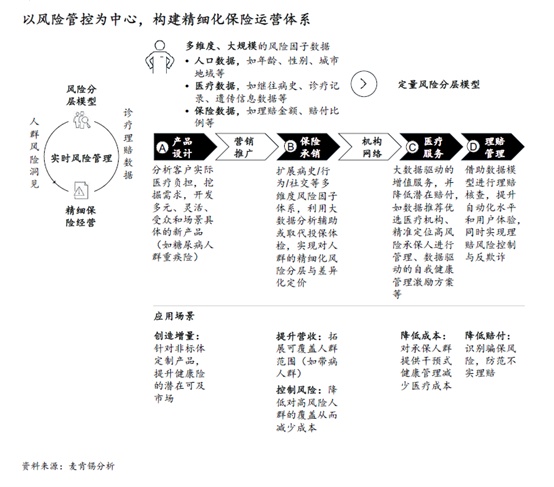


Domestic case: Establish a risk stratification model to improve the performance and efficiency of insurance underwriting.


Taking the underwriting link of the insurance core as an example, in the traditional insurance business process, the pursuit of comprehensive information as much as possible easily leads to pain points such as complicated process, poor experience of policyholders, inefficient information collection and poor quality. The underwriting decision-making is too standardized and lacks customization, which can not accurately reflect the health risks of individual policyholders. At the same time, insurance companies need to invest a lot of offline underwriting resources by relying on the risk exemption form that the insured voluntarily informs or falsely informs the risk.


Through the risk analysis of big data population, we can identify the predictive factors (such as lifestyle preferences) that are highly related to the occurrence and payment of diseases, and establish an accurate underwriting model for health insurance. Based on the individual information of the insured (such as age, past medical records, etc.), the health risk score is automatically generated and compared with the regional average score to form a refined quantitative risk assessment. Based on the underwriting score, the crowd is finely stratified to form a "black and white list". For example, step-by-step pricing is adopted for high-risk groups, and manual review is conducted; For low-risk people, a rapid underwriting process is adopted to improve efficiency.


We use the risk prediction model to measure the simulated insured population, which not only simplifies the underwriting process of 50% population, but also adjusts the underwriting decision through the identified high-risk population, thus reducing the potential compensation by 10%~15%. The risk prediction model has achieved important business value, and it is a classic use case to upgrade the insurance claims service experience and reduce the medical cost.


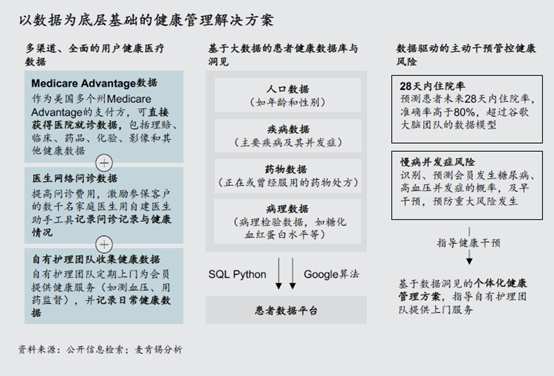
International case: establish a risk-driven health management scheme with data as the core to improve medical effects and reduce costs.


Take an insurance company in the United States that focuses on Medicare products as an example. Because Medicare customers are mainly elderly people, users’ medical service costs are high, especially for chronic diseases and their complications, which often account for a large proportion of medical claims. In order to alleviate the pressure of medical claims, the company relies on the advantages of core data to collect all-round user health medical data through MA insurance data, doctor network and self-built team health services. At the same time, relying on Google’s advanced algorithm platform, an insight analysis database of complex patient health data is established. Based on this, the company developed and implemented a patient-active intervention health risk management and control solution.


Accurate intervention behavior has achieved remarkable results. The insurance company has successfully improved the management effect of chronic diseases, reduced the hospitalization rate of elderly patients by 30% while reducing costs and expenses, and greatly improved the disease control rate of patients with diabetes and hypertension.


Path three


Remodeling the whole process of product design and sales around customer needs and experiences.


With the rise of "personal consumption consciousness" in the global health industry, consumers have begun to play an increasingly important role in the decision-making of health payment. Whether it can more accurately meet the needs of different segments of people (such as the elderly, the sick, the high-income people, etc.) and different levels (such as basic medical care, service experience, etc.) has become the key to solve the serious homogenization of health insurance products in China today.


The product design, marketing promotion and experience shaping with customer demand as the core indicate that the health insurance industry in China has undergone a comprehensive transformation from the barbaric growth stage of "sales is king" to the era of "demand-oriented" value operation.


Grasping customer demand and recreating product form


The homogenization problem of health insurance products in China is serious, and the insurance clauses are highly similar to those of insurable people. Standardized basic products are difficult to meet the different medical needs of different segments of people in different scenarios, and it is even more difficult to achieve differentiated value creation, which leads to the fact that today’s health insurance sales basically rely on channel capabilities and price competition is fierce. In the future, it will be the key for health insurance companies to create differentiated advantages, enhance product value and market penetration by building product innovation capabilities driven by user needs.
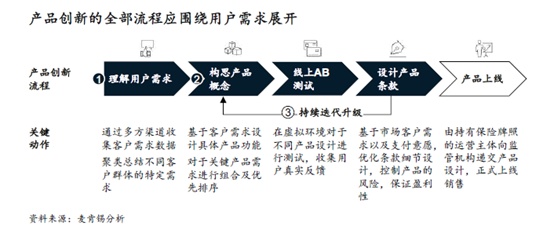


In the process of product innovation, customer insight, product system and continuous iteration are the three core elements of demand-driven product innovation.


First of all, digging deep into customer needs is a key first step. With the help of systematic research tools, insurance companies can divide the customer groups into groups of people, scenes and life stages, and deeply understand the needs of users for medical care, health and services;


Secondly, insurance companies need to draw a comprehensive functional map of innovative products, sort out the existing product positioning in the internal system, and comprehensively collect the best practices of industry product functions and use cases;


Finally, the organizational level needs to establish innovative process mechanisms and underlying capabilities to support rapid product iteration and achieve accurate matching between customer needs and product functions.


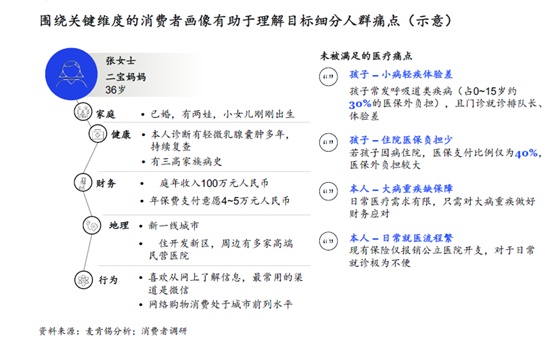
(A) customer insights


Demand insights from multiple channels and all directions are the foundation of refined product design. Externally, design a scientific questionnaire, and under the guidance of mature system methodology, gain a deep insight into the unmet needs of health insurance customers. Internally, cultivate the concept and consciousness of customer-centered sales system, and carry out active and systematic collection of user demand information to consolidate the data foundation. Combined with external industry research and internal sales insights, the characteristics of target customer groups are generated, and unmet medical needs are identified, which provides important guidance for product innovation.


(2) Product system


Identify the potential development direction of products based on internal combing and external benchmarking product system. Internally, define the strategic positioning of products and core businesses, set subdivision dimensions in key categories such as revenue creation, market capture and customer service, and identify unmet opportunities through quantitative evaluation. Externally, pay close attention to major competitors and market-leading enterprises, understand their layout in major innovation directions such as coverage, coverage, coverage period and disease types, and build a rich industry intelligence database. On the basis of fully understanding the demand side, systematically build a supply-side "arsenal".


(3) Continuous iteration


Fast iterative optimization based on real customer feedback to maximize product innovation value. Traditional insurance companies urgently need agile transformation, introduce multi-functional collaborative teams (such as development, sales and actuarial personnel), and set up special posts for customers’ needs to ensure that customer feedback falls into product development; In addition, we should abandon the traditional assembly line product development process and form a "sprint" work cycle with small steps and quick runs, flexibly adjust the direction of product development, improve efficiency and avoid waste of resources.


Excavate high potential customers and realize precise marketing.


Similar to other insurance products, China Health Insurance relies heavily on offline agent team to promote sales with indiscriminate recommendation, which often leads to opaque product information, untimely communication and poor customer experience. If we can achieve accurate marketing based on users’ needs and preferences, we can effectively solve the pain points, and effectively improve the efficiency and success rate of customer sales transformation through thousands of customized promotion programs.


Precision marketing has important business value for old customer operation and new customer mining. On the one hand, by identifying high-risk customers and high-value customers and taking precise intervention, we can effectively prevent the loss of old customers and tap the potential of new customers; On the other hand, screening high-potential customers with willingness and possibility to purchase health insurance among existing insurance customers (such as life insurance and property insurance) to improve the success rate of cross-selling; In addition, innovative distribution channels (such as Internet channels) should be developed, and marketing schemes that meet the target customers of the channels should be formulated, so as to expand the scale of new customers.


Establishing a multi-dimensional user database, including demographics and marketing feedback, is the basis for achieving precision marketing. On this basis, insurance companies can further overlay claims information covering patient treatment plans and related medical costs. Different from general operating data, claims data has a large information content and a high degree of professionalism, which requires insurance companies to have both digital marketing and professional medical capabilities. Accordingly, the core insight of the database can guide the business development more intuitively and bring higher business growth value.


Precision marketing can be divided into three steps: high-potential customer identification, customized scheme design and effective implementation and promotion.


(1) Identification of high-potential customers


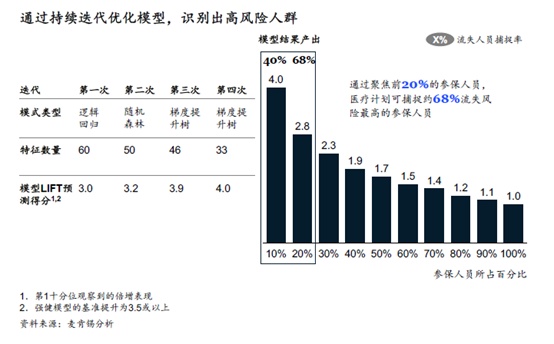
The essence of precision marketing is to identify high-potential customers and their preferred marketing contents and methods. As mentioned above, the establishment of multidimensional database is helpful to identify key potential customers and predict risk factors, so as to find out key target customers with high potential. The optimized algorithm will recommend the most suitable health products according to the background and needs of consumers, and then iterate the best marketing content through AB testing and other methods. Finally, use online and offline marketing channel tools (such as WeChat, telephone, offline visits, physical advertisements, etc.) to clarify the most effective way to interact with target customers.


(2) Customized scheme design


After fully understanding the preferences of target customers for marketing content and methods, insurance companies can start to formulate all-round marketing interaction programs. From scattered "individual combat" to systematic "marketing promotion combination boxing", we can create synergy between channels, avoid resource waste and improve marketing efficiency.


(3) Effective promotion and implementation


The effective implementation of customized marketing plan can not be separated from dynamic management. Based on dynamically generated quantitative effect feedback, insurance companies can optimize the scheme in real time and adjust the established scheme. The insight of marketing data can provide key input for many business scenarios, such as internal sales staff management, marketing expense planning, product design innovation and so on.


Driven by digitalization, recreating end-to-end user experience


Previously, due to the mismatch between users and payers of health care, the industry did not focus on user experience. In view of the increasing importance of consumers in medical decision-making, more and more enterprises are taking user experience into important strategic consideration and increasing resource input. User experience optimization is not only a customer-oriented service upgrade, but also brings commercial value to insurance companies, such as reducing customer churn, improving new customer acquisition, and increasing service bargaining.


In this link, insurance companies need to focus on three major areas:


(A) Understanding user needs is the basis and foothold of reshaping user experience.


Insurance companies should use scientific methods and tools to deeply understand users’ experience feedback on product rights, process tools and manual services. At the same time, for key links, we will dig deep into the feedback of segmentation process and finely polish user satisfaction. Then, with the update of product form, the feedback of user experience is collected in real time to further optimize product iteration.


(B) emphasizing the "user experience" of organizational transformation and upgrading


First of all, we should emphasize the importance of user experience from the company strategy, build cross-departmental value recognition, and take it as an important direction to guide business development. At the same time, we will increase the input of relevant resources to enhance the user experience, and promote the transformation of products, services, experiences and business models aimed at it. Finally, the internal core competence is established to support the transformation, such as employee concept transformation and ability training, strengthening technical, data and analysis support, establishing cross-functional governance and agile operation mode, and deploying measurement and performance management systems.


(C) Make full use of digital empowerment to achieve a leap-forward upgrade of user experience.


Using modern scientific and technological tools such as Internet platform, mobile App and AI computing, we will focus on solving the inherent pain points such as complex and inefficient traditional insurance sales and service processes, and create an efficient, convenient and easy-to-use modern insurance experience.


This article was first published on WeChat WeChat official account: Huibao Tianxia. The content of the article belongs to the author’s personal opinion and does not represent Hexun.com’s position. Investors should operate accordingly, at their own risk.
(Editor: Ma Jinlu HF120)

These new regulations will be implemented from September.

  Since September, a number of new laws and regulations will be implemented soon, involving barrier-free environment construction, ecological protection of the Qinghai-Tibet Plateau, consular protection and assistance, legal aid and other aspects.

  It is worth noting that the newly promulgated barrier-free environment construction law has attracted much attention, which clarifies that the state supports the installation of elevators or other barrier-free facilities in existing houses, thus benefiting the disabled and the elderly.

  At the same time, some local laws and regulations related to the national economy and people’s livelihood have also been implemented. For example, Chongqing has issued the first local anti-espionage supporting regulations in China, detailing anti-espionage security precautions; Fujian has formulated fire regulations, explicitly prohibiting electric bicycles from parking or charging in the building; Sichuan will bring live delivery and take-away food delivery into supervision, and clarify food safety responsibilities; Hainan province completely prohibits any organization or individual from providing tattoo services to minors.

  Barrier-free environment construction law: providing convenience for the disabled and the elderly

  The Law on Barrier-free Environment Construction will come into effect on September 1st. This law consists of eight chapters, including general provisions, barrier-free facilities construction, barrier-free information exchange, barrier-free social services, safeguard measures, supervision and management, legal responsibilities, and supplementary provisions.

  The new law clarifies that newly built, rebuilt and expanded residential buildings, residential areas, public buildings, public places, transportation facilities, urban and rural roads, etc. shall meet the standards for barrier-free facilities construction. The state supports the installation of elevators or other barrier-free facilities in existing multi-storey houses in old urban communities.

  The new law also specifically added safeguards, supervision and management, legal responsibilities and other contents, and clarified the relevant responsible subjects, regulatory authorities, and penalties for violating relevant regulations.

  New regulations on legal aid: people no longer need to submit proof of financial difficulties.

  The newly revised Procedures for Handling Legal Aid Cases shall come into force on September 1, 2023.

  The revised procedures include six chapters and 46 articles, covering five aspects: clarifying the division of responsibilities and handling principles, optimizing the application procedures, improving the review procedures, refining the assignment procedures and standardizing the undertaking requirements. It is mainly clear that legal aid institutions should publicize and update the application conditions for legal aid in a timely manner; When an applicant applies for legal aid, it is no longer necessary to submit a certificate of financial difficulties.

  Standardize the management of places for religious activities: no commercial propaganda is allowed.

  The Measures for the Administration of Places for Religious Activities shall come into force as of September 1st. There are 10 chapters and 76 articles in the Measures, which improve the management system of religious activities.

  The Measures stipulate the procedural requirements for the preparation, establishment and registration of venues for religious activities, standardize the management of venues for religious activities, clarify the establishment of management organizations for venues for religious activities, implement democratic management, establish and improve the personnel management system, and standardize the religious activities, social activities and foreign exchanges of personnel in this venue.

  The "Measures" stipulate that no organization or individual may conduct commercial propaganda in the name of a religious activity place or use the influence of a religious activity place to seek illegal interests; There shall be no subordinate relationship between religious activities.

  Ecological Protection Law of Qinghai-Tibet Plateau: Establishing and Perfecting Ecological Risk Prevention and Control System

  The Law on Ecological Protection of Qinghai-Tibet Plateau came into effect on September 1st. This law adheres to the principle of ecological protection first, focuses on the main contradictions, special problems and outstanding characteristics of ecological protection in the Qinghai-Tibet Plateau, and promotes the comprehensive management, systematic management and source management of grass, sand and ice in the mountains, rivers, fields and lakes as a whole, providing legal protection for ecological protection and sustainable development in the Qinghai-Tibet Plateau.

  For example, in terms of ecological protection and restoration, the integrated protection and systematic management system is stipulated for the protection and restoration of ecological elements such as "mountains, rivers, fields, lakes, grass, sand and ice", biodiversity protection and core areas such as the Three Rivers, and the requirements for ecological environment protection in tourism and mountain outdoor sports are strengthened; In strengthening the prevention and control of ecological risks, it is required to establish and improve the ecological risk prevention and control system of the Qinghai-Tibet Plateau, and do a good job in various monitoring and early warning, investigation and evaluation, prevention and control without disturbing the natural conditions.

  Special legislation on citizens’ rights and interests abroad: clarifying the responsibilities and obligations of all parties

  The Regulations on Consular Protection and Assistance came into effect on September 1st, which is the first special legislation on consular protection and assistance and the safety of China citizens and institutions overseas.

  There are 27 articles in the Regulations, the main contents of which include: clarifying the responsibilities and obligations of all parties in consular protection and assistance. Specify the responsibilities of the Ministry of Foreign Affairs, diplomatic agencies abroad and relevant departments of the State Council, and clarify the self-protection obligations of China citizens, legal persons and unincorporated organizations abroad. Clear consular protection and assistance acceptance methods and areas of responsibility, so as to facilitate China citizens, legal persons and unincorporated organizations to consult and apply for consular protection and assistance.

  Food and cosmetics packaging "slimming": moon cake packaging can not put tea and other products.

  The State Administration of Market Supervision newly revised and issued "Restricting the over-packaging of commodities requires food and cosmetics" (GB 23350— 2021), a mandatory national standard, came into effect on September 1st, and standardized the packaging requirements of 31 kinds of food and 16 kinds of cosmetics from the aspects of packaging void ratio, packaging layers and packaging cost. Products that do not meet the new standard will not be allowed to be produced, sold or imported.

  The national standard makes it clear that food and cosmetics produced and sold in China and imported from abroad are applicable to this standard, while export products are not applicable to this standard, and gifts and non-sale products are not applicable to this standard. Especially in the mixed packaging of moon cakes, according to the requirement that "moon cakes should not be mixed with other products", other products such as red wine, tea, knives and forks can not be put in the packaging of moon cakes, and products such as food deoxidizers and ice packs can be put in to prevent moon cakes from deteriorating if necessary.

  Standardize the independent directors of listed companies: work in at most three domestic companies.

  The Measures for the Administration of Independent Directors of Listed Companies shall come into force on September 4th. The Measures mainly clarify the qualifications, appointment and dismissal procedures, responsibilities and ways of performing duties, performance guarantee mechanism and legal responsibilities of independent directors, and set a one-year transition period for related matters. Among them, it is clear that independent directors should, in principle, be part-time independent directors in at most three domestic listed companies; Independent directors are required to work in the field of listed companies for not less than fifteen days each year, and should make work records.

  Chongqing: The First Local Anti-Spy Regulation in China

  Recently, the Standing Committee of Chongqing Municipal People’s Congress deliberated and passed the Regulations on Anti-Spy Work in Chongqing, which came into effect on September 1st. This "Regulations" is the first supporting local regulations in China after the revision of the Anti-Spy Law.

  The full text of the "Regulations" consists of 29 articles, regardless of chapters. It further enhances the operability and enforceability from the aspects of improving the anti-espionage work mechanism, refining the anti-espionage security measures, strengthening the anti-espionage work guarantee and assessment, and improving the legal responsibility, which provides clearer legislative guidance for Chongqing to carry out anti-espionage work.

  Fujian: Electric bicycles are charged indiscriminately or fined.

  The Fire Protection Regulations of Fujian Province came into effect on September 1st, and made specific provisions on the parking and charging of electric bicycles. The "Regulations" also clarify that if electric bicycles are parked in public areas such as public hallways, evacuation routes, safety exits, stairwells, or electric bicycles are charged by private wires and sockets, the township (town) people’s government and sub-district offices shall order them to make corrections, and if they refuse to make corrections, the units and individuals shall be fined accordingly.

  Jiangsu: legislation to retain more primary medical and health personnel

  The Regulations of Jiangsu Province on Primary Health Care came into force on September 1st. As the first local law in the field of primary health care at the provincial level in China, in terms of the access mechanism, the Regulations clearly stipulate that the recruitment of primary health care personnel can relax the registration conditions and reduce the proportion of examinations, and the proportion of examinations can be set for positions that are really difficult for recruiters. For positions that are difficult to form full competition, under the premise of meeting the requirements of practice access, the registration conditions can be relaxed and the proportion of examination can be reduced; If the ratio of the number of successful applicants for the same post and the number of candidates to be recruited is the same as that of the post, the candidates for medical examination can be determined directly by means of interviews; The recruitment procedure can be simplified for those who are in short supply of specialties such as general practice, pediatrics and public health.

  Sichuan: Bring live delivery and take-away food delivery into supervision.

  The Regulations on Food Safety in Sichuan Province will come into effect on September 1st, which will further improve the legal system of food safety in Sichuan.

  The "Regulations" will include operators who provide network access services for platforms and merchants in supervision and clarify food safety responsibilities. Further standardize the behavior of live broadcast with goods, and marketing activities shall not implement the confusing behavior of "hanging sheep’s head and selling dog meat". Refined the management of take-away food delivery, requiring the use of sealed labels or disposable sealed packaging bags. In addition, the "Regulations" also clearly establish a unified traceability platform for food safety public services in the province and build an efficient full-chain supervision mechanism.

  Hainan: It is forbidden to provide tattoo services to minors.

  The Provisions of Hainan Special Economic Zone on Prohibiting the Provision of Tattoo Services to Minors came into force on September 1st.

  The "Regulations" clearly prohibit any organization or individual from providing tattoo services to minors. Ordinary primary and secondary schools, special education schools, secondary vocational schools, specialized schools and kindergartens are not allowed to set up tattoo service places or carry out tattoo service activities within 200 meters.

  Tianjin: Legislation Empowering Gene and Cell Industry Development

  The Regulations of Tianjin Municipality on the Promotion of Gene and Cell Industry came into force on September 1st. The "Regulations" clarify that Tianjin will promote the construction of parks such as "Cell Valley" in Binhai New Area as a whole, attract and promote the gathering of market elements such as talents and capital, and promote the deep integration of innovation chain and the industrial chain; Support the construction of the core base of medical science and technology innovation system in China, encourage the Beijing-Tianjin-Hebei industrial linkage based on the base, optimize the cross-regional industrial layout, and consolidate the leading position in the advantageous fields.

The Voice of "Rule of Law" in the Report of the 19th National Congress

  editorial comment/note

  The report of the 19th National Congress of the Communist Party of China pointed out the direction, goal and task of the development of the new era, which runs through a lot of spirit and requirements of the rule of law. These five key words of the rule of law extracted from the report of the 19th National Congress make us feel the power of the rule of law and a bright future.

  Keyword 1

  [Governing the country according to law in an all-round way]

  Summary of the report: Governing the country according to law in an all-round way is the essential requirement and important guarantee of Socialism with Chinese characteristics. We must implement the party’s leadership in the whole process and all aspects of governing the country according to law, unswervingly follow the road of rule of law in Socialism with Chinese characteristics, improve the socialist legal system with Chinese characteristics at the core of the Constitution, build the legal system in Socialism with Chinese characteristics, build a socialist country ruled by law, develop Socialism with Chinese characteristics’s theory of rule of law, persist in promoting the rule of law, rule of law and administration according to law, adhere to the integration of a country ruled by law, a government ruled by law and a society ruled by law, adhere to the combination of rule of law and rule of virtue, and deepen the judicial system.

  Keyword 2

  [Insist on enforcing the rule of law]

  Summary of the report: Governing the country according to law in an all-round way is a profound revolution in state governance. We must adhere to the rule of law and promote scientific legislation, strict law enforcement, fair justice and law-abiding for the whole people. Establish a central leading group for comprehensively administering the country according to law, and strengthen unified leadership over the construction of China ruled by law. Strengthen the implementation and supervision of the constitution, promote the constitutional review, and safeguard the authority of the constitution. Promote scientific legislation, democratic legislation, and legislation according to law, promote development with good laws, and ensure good governance. Build a government ruled by law, promote administration according to law, and strictly regulate fair and civilized law enforcement. We will deepen the comprehensive reform of the judicial system, fully implement the judicial responsibility system, and strive to make the people feel fair and just in every judicial case. Strengthen the popularization of law among the whole people, build a socialist culture of rule of law, and establish the concept of rule of law that the constitution is supreme and everyone is equal before the law. Party organizations at all levels and all party member should take the lead in respecting the law-abiding usage of science and law. No organization or individual is allowed to have the privilege beyond the constitutional law, and it is absolutely not allowed to substitute words for law, suppress law with power, violate the law for profit, and bending the law.

  Keyword 3

  [Reform of national supervision system]

  Summary of the report: Deepen the reform of the national supervision system, push the pilot work across the country, set up national, provincial, municipal and county supervision committees, and co-locate with the party’s discipline inspection organs to achieve full coverage of all public officials exercising public power. Formulate the national supervision law, endow the supervision committee with responsibilities, authority and investigation means according to law, and replace the "two regulations" measures with lien. Reform the audit management system and improve the statistical system. We will build an authoritative and efficient supervision system with unified party command, comprehensive coverage, and integrate inner-party supervision with state organs, democratic supervision, judicial supervision, mass supervision, and public opinion supervision, so as to enhance the joint efforts of supervision.

  Keyword 4

  [Anti-corruption national legislation]

  Summary of the report: It is necessary to adhere to no-forbidden zone, full coverage and zero tolerance, to emphasize containment, strong pressure and long-term deterrence, to investigate bribery together, and to resolutely prevent the formation of interest groups within the party. Establish an inspection system in city and county party committees and intensify efforts to rectify corruption around the masses. No matter where the corrupt elements flee, they must be arrested and brought to justice. Promote anti-corruption national legislation and build a reporting platform covering the discipline inspection and supervision system. Strengthen the shock of not daring to rot, fasten the cage that can’t rot, enhance the consciousness of not wanting to rot, and exchange Haiyan Heqing and Langlang Gankun through unremitting efforts.

  Keyword 5

  [Social governance pattern of co-construction, co-governance and sharing]

  Summary of the report: Strengthen the construction of social governance system, improve the social governance system of party committee leadership, government responsibility, social coordination, public participation and rule of law, and improve the level of socialization, rule of law, intelligence and specialization of social governance. Strengthen the construction of mechanisms to prevent and resolve social contradictions and correctly handle contradictions among the people. Establish the concept of safe development, carry forward the idea of life first and safety first, improve the public safety system, improve the responsibility system for production safety, resolutely curb serious accidents and enhance the ability of disaster prevention, mitigation and relief. We will speed up the construction of a public security prevention and control system, crack down on and punish illegal and criminal activities such as pornography, gambling, drugs and kidnapping, and protect people’s personal rights, property rights and personality rights. Strengthen the construction of social psychological service system and cultivate self-esteem, self-confidence, rationality, peace and positive social mentality. Strengthen the construction of community governance system, push the focus of social governance down to the grassroots level, give play to the role of social organizations, and realize the benign interaction between government governance, social regulation and residents’ autonomy.

The Anhui Flood Control and Disaster Relief Work Symposium was held, and Han Jun and Wang Qingxian gave instructions.

  (Reporter Wang Hongyi) On the afternoon of July 6, Anhui Flood Control and Drought Relief Headquarters held a special meeting on flood control and disaster relief work in the whole province, to study and implement the spirit of the important instructions made by the Supreme Leader General Secretary on flood control and disaster relief work, to implement the deployment of the national flood control and disaster relief work dispatching meeting, and to convey the relevant instructions of Han Jun, secretary of Anhui Provincial Party Committee, and Wang Qingxian, governor of Anhui Province. Fei Gaoyun, member of the Standing Committee of Anhui Provincial Party Committee and executive vice governor, attended the meeting and delivered a speech.

  Han Jun pointed out that flood control is related to the overall situation of economic and social development, security and stability. At present, Anhui Province is about to enter the critical period of "seven downs and eight highs" flood control. Recently, a new round of heavy precipitation accompanied by strong convective weather will appear in some areas, and the flood control situation is complicated and severe. All relevant departments at all levels should conscientiously implement the spirit of the important instructions of the Supreme Leader General Secretary, adhere to the people first, life first, adhere to the combination of prevention first, prevention and rescue, resolutely overcome paralysis and empiricism, and never relax and pay close attention to all flood control measures. It is necessary to strengthen monitoring and early warning, consultation and judgment, overall coordination, comprehensively investigate weak links and potential risks, and do a solid job in disaster prevention such as floods in small and medium-sized rivers, accidents in small and medium-sized reservoirs, urban waterlogging, mountain torrents and mudslides. Once there is a danger, it is necessary to deal with it scientifically, decisively and effectively, and make every effort to rescue and provide disaster relief. Party committees and governments at all levels should strictly implement the main responsibility of flood control and disaster relief, strictly implement the systems of duty and information submission, and leading cadres at all levels should take the lead and command from the front, and implement various responsibilities and measures in every link, post and personnel to ensure An Lan, social peace and people’s well-being.

  Wang Qingxian’s instructions pointed out that we should base ourselves on preventing floods, fighting floods, seizing major risks and saving major disasters, and pay close attention to all the work of flood control, flood preparedness and disaster relief. It is necessary to strengthen monitoring, forecasting and early warning, pay close attention to changes in weather and rain conditions, conduct timely consultation and judgment, improve the accuracy of forecasting as much as possible, and extend the forecast period. It is necessary to strengthen the defense of key parts, increase the intensity of duty and inspection, and highlight the investigation and rectification of hidden dangers in key parts such as mountain flood danger areas, hidden dangers of geological disasters, and low-lying areas in cities. It is necessary to strictly implement the responsibility system for flood control and drought relief, strictly observe work discipline, improve the flood control and drought relief command system that is linked from top to bottom and departments, and resolutely win the initiative in flood and drought disaster prevention.

  The meeting stressed that it is necessary to focus on meteorological monitoring in rainstorm areas and geological disaster-prone areas of mountain torrents, encrypt the frequency of joint meetings, release early warning information in time, and decisively transfer the masses in advance. It is necessary to further investigate the hidden risks of key parts such as small and medium-sized rivers, small and medium-sized reservoirs and tailings ponds, formulate urban drainage plans, and take rigid measures such as "shutting down and withdrawing" as appropriate. It is necessary to take the initiative to shoulder the responsibility, deploy emergency rescue forces in advance, strictly implement the duty system, strengthen supervision and inspection of flood control work, and ensure the safety and stability of the province.

Taco Bell: When the trendy fast food meets the top of the game.

     One is the trendy fast food, and the other is the top of the game. What kind of chemical reaction will happen when the hot American Mexican Tower meets Valkyria who is fighting for beauty?

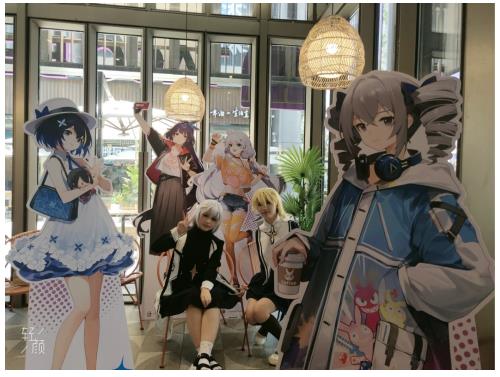
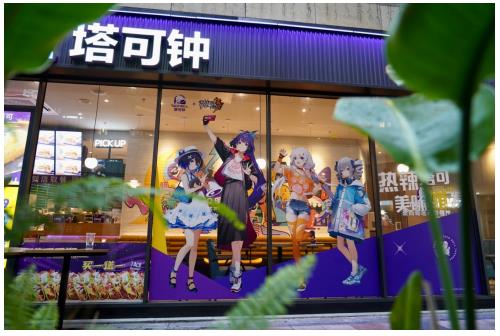
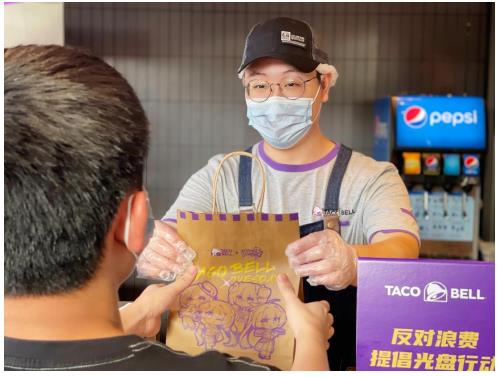
  In this hot July, Taco Bell, a famous American Mexican fast food brand, joined hands with Crash 3 to launch a summer joint activity of "Hot Taco, Delicious Crash" nationwide. In order to allow consumers to experience the atmosphere of the game in an immersive way, Taco Bell not only provides exclusive catering, joint packaging and package around the super-high-standard carnival for all the captains, but also launches 20 restaurants with the theme of Collapse 3 all over the country, from window stickers to table stickers, and the counter layout all reflects the elements of various games. The four leading characters at the door are eye-catching and the fans have taken photos and punched in.

  At the same time, Taco Bell also issued a professional training manual specifically for restaurant partners, requiring restaurant employees to understand games and joint roles, customizing various "secret codes" for captains and providing rich gifts to make customers feel full of atmosphere, while enjoying food, experience links and fetters that have never existed in the virtual world.

  "Iron Powder Shop Assistant" met "Captain Customer"

  "Are you my captain?" A Zhi, an employee of Guangzhou Tianhe Vanke Taco Bell’s "Collapse 3" theme restaurant, warmly greets customers with the mantra of the game character Raiden Mei.

  A Zhi is a big fan of the game "Crash", and he has liked it for 7 years since the game was launched. "I am really excited when I know that Taco Bell and Collapse 3 are linked! I didn’t expect to be able to play my hobbies at work and bring customers an immersive experience of’ food+games’. It can not only recommend delicious food for gamers, but also let restaurant partners know my favorite collapse 3. " In addition to participating in the layout of the theme restaurant, A Zhi naturally became the "teacher" of other partners in the restaurant. According to the training manual, A Zhi took other partners in the restaurant to play games, experience games and understand games.

  "Please, another me." After the theme restaurant was launched, in Guangzhou Tianhe Vanke Taco Bell, there were signs of linkage one after another. With the help of A Zhi, other partners in the restaurant knew a lot about the roles of Collapse 3. When gamers communicated with Coser, everyone could accurately say the names of the roles described by the players and actively interact with consumers.

  On the first day of the activity, Mike, a gamer, came to Taco Bell. At the suggestion of A Zhi, he selected Taco Bell, which suits his taste, and took photos and punched in every corner of the theme restaurant with Taco Bell and his favorite game surroundings. "I’m so happy. Taco Bell theme restaurant is really like a game venue in another space. Both players and restaurant employees are highly involved. Here, I found a strong sense of belonging."

  Considering the hot weather in Guangzhou during the event, in order to let enthusiastic consumers enjoy better service, restaurants in A Zhi also opened their doors in advance during the event, so that customers waiting in line outside could wait in the restaurant. The restaurant will also provide customers with a second paper bag and taco cover at the request of customers when conditions permit, which is convenient for them to collect, and the strength is "pet powder".

  Power generation for love Coser beautiful girl realizes her dream

  The "magic girl facing the DPRK" started playing Collapse 3 a year and a half ago. She is usually taciturn, but she talks about Collapse 3 endlessly. Chao Chaochao said that in the game, she experienced the wonderful friendship between girls, and she also quoted Alicia, the character in the game, to explain why she participated in this activity.

  "only spend time on people you like, but everyone likes it; I only pay attention to interesting things, but everything is interesting. For me, food and games are interesting things. "

  On the first day of the event, Chao Chao wore her favorite "Keren" uniform and came to Taco Bell’s "Collapse 3" themed restaurant in Wuhan Guojin Tiandi. As a "house girl", she not only tried Taco for the first time, but also met a group of like-minded "captains", which made her praise the brand again and again.

  "The first time I ate Taco Bell, I fell in love with Taco Cake. The cheese inside tasted good, and I also liked the whole restaurant style. Now I have become a fan of Taco Bell. In the future, I will often meet my friends in Taco Bell to talk about our favorite games and food. " The DPRK said.

  After the DPRK told the DPRK that she knew about Taco Bell’s activity, she and her friends were very excited. They rushed to make their favorite character Keren’s costume overnight, hoping to show it to like-minded friends in the restaurant.

  "It’s so lively offline. Usually in life, it’s hard for me to meet partners who discuss the crash game together. As a Coser, there are few opportunities for us to take photos with the characters. This activity not only made me gain so many friends at once, but also fulfilled our Coser’s dream. Taco Bell’s friends were so enthusiastic and helped us take many beautiful photos. "

  For their favorite game Collapse 3, "Magic Girl Facing the DPRK" also wants to call the official: Can you give Keren Kaslanna a birthday?

  From "social fear" to "social cow", he gained online and offline friendship.

  In the early morning of July 8, at the entrance of Taco Bell in Shanghai Seven Babies Dragon City, a penny classmate from Shanghai Songjiang University Town came to the queue early, and he was the first in the queue, hoping to get the linked peripheral products as early as possible. Xiao Qian originally planned to go back to his hometown for an internship in the summer vacation, but just a few days ago, he learned that the joint activity of Taco Bell and Crash 3 would land in Shanghai. In order to participate in offline activities and collect their favorite game surroundings for his good friends, he did not hesitate to sign the high-speed train home.

  It’s still early to open the restaurant, so Penny sat on the ground, put on headphones and played games with his iPad. Just as he was absorbed in the game world, he suddenly felt someone patted him on the shoulder. He turned his head and found a boy behind him, shyly showing him his mobile phone. It turned out that they had the same game role, from role to play, from seiyuu to lines. Penny and this newly met "stranger" soon became familiar.

  During the conversation, Xiao Qian learned that the boy who greeted him on his own initiative was Xiao Gong, a native of Shanghai. Xiao Gong is usually a little introverted and not used to dealing with strangers. A few days ago, he happened to see the information of joint activities in the player community, thinking that other game lovers should gather in the offline theme store, so he came to the store early in the morning and wanted to make like-minded friends while getting around the game. At the event site, I saw Xiao Qian, who has a common role in the game, and the idea of wanting to talk to people about the role of the game defeated the "social fear". Xiao Gong took the courage to take the initiative to talk to Xiao Qian and gained an offline friendship.

  "This kind of off-line gathering is really interesting," Xiao Gong said. "I tasted new food and made new friends. It was so happy for us to discuss the role experience together. I hope there will be more such activities in the future. "

  In Taco Bell’s "Collapse 3" theme restaurant in 11 cities, every player and consumer has gained their own fun and resonance here. Some have made new friends, some have sought happiness in cosplay, and some have traveled thousands of miles to another city just to collect the surrounding of their beloved characters … Because of their love and food, these young people gathered in Taco Bell’s restaurant, turning virtual adventures into real links, and also making them fully feel the brand.

  With the increasing demand of young consumers for consumption experience, restaurants are no longer just places for dining, but have become "self-projection" of young consumers for a better life. From the official announcement that James LeBron became the spokesperson to the recent co-signing of Collapse 3, Taco Bell has always grasped the trend of young consumers, providing consumers with hot and energetic international popular American Mexican fast food, and at the same time leading the trend culture with a vibrant image.


[advertisement]

(Disclaimer: This article is reproduced and published for the purpose of spreading commercial information on this website, and does not represent the views and positions of this website. All rights and legal responsibilities of the texts, drawings, audio and video materials involved in this article belong to the material provider. This website does not make any guarantee or commitment to the authenticity of all the information such as words and pictures, nor does it constitute any suggestions for purchase or investment, so the operator bears his own risks. )


Seismological Bureau of China released the intensity map of Lushan 6.1 earthquake in Sichuan.

According to China Earthquake Administration official WeChat WeChat official account news on the 4th, at 17: 00 on June 1st, 2022, an earthquake of magnitude 6.1 occurred in Lushan County, Ya ‘an City, Sichuan Province (30.37 degrees north latitude, 102.94 degrees east longitude) with a focal depth of 17 kilometers. According to the deployment of the Emergency Management Department, the Seismological Bureau of China organized the Seismological Bureau of Sichuan Province, the Seismological Bureau of Chongqing and Guizhou provinces (cities) and relevant directly affiliated research institutes to form a field task force, and passed the earthquake damage investigation in the disaster area in accordance with "Earthquake Site Work Part 3: Investigation Specification" (GB/T 18208.3-2011) and "China Earthquake Intensity Table" (GB/T 17742-2020). The intensity distribution of this earthquake was determined by comprehensive application of scientific and technological support achievements such as instrument intensity, seismic tectonic background, aftershock distribution, focal mechanism, remote sensing image, etc., and the Intensity Map of Lushan, Sichuan (M 6.1) was compiled according to the Code for Mapping Seismic Intensity Map (GB/T 38226-2019).

Seismic intensity distribution

The highest intensity of this earthquake is ⅷ (8 degrees), and the major axis of the isoseismal line is northeast, with a major axis of 76 kilometers and a minor axis of 65 kilometers. The area of VI (6 degrees) and above is 3,887 square kilometers, mainly involving Lushan County, Baoxing County, tianquan county, Mingshan District, Yucheng District, Qionglai City and Dayi County in Chengdu, Sichuan Province.

The ⅷ degree (8 degree) area covers an area of 131 square kilometers, mainly involving Taiping Town and Shuangshi Town in Lushan County, Ya ‘an City, Sichuan Province, Lingguan Town and Muping Town in Baoxing County, totaling 4 towns.

The VII degree (7 degree) area covers an area of 979 square kilometers, mainly involving Taiping Town, Dachuan Town, Baosheng Township, Shuangshi Town, Luyang Street, Longmen Town, Muping Town, Lingguan Town, Fengtongzhai Township, Wulong Township, Longdong Town and Daxi Township in Baoxing County, Sichuan Province. Tiantaishan Town, Qionglai City, Chengdu, has a total of 13 townships (streets).

The VI degree (6 degree) area covers an area of 2,777 square kilometers, mainly involving Dachuan Town, Luyang Street, Longmen Town, Feixianguan Town, Siyan Town and Baosheng Township in Lushan County of Ya ‘an City, Longdong Town, Fengtongzhai Township, Wulong Township, Lingguan Town, Daxi Township, Qiaoqi Tibetan Township, Muping Town in Baoxing County, and xiaohe town, tianquan county. There are 38 towns (streets) in Tiantaishan Town, Datong Town, Huojing Town, Jiaguan Town, Nanbaoshan Town, pingle town Town, Linji Town, Sangyuan Town, Huashuiwan Town, Xiling Town and Jiangzhen Town in Dayi County.

In addition, some areas outside the VI degree (6 degree) zone have also been affected, and some old houses have been damaged.

This figure relates to noun interpretation.

ⅷ degree (8 degrees): a few wooden houses were seriously damaged, and most of them were moderately damaged and slightly damaged; A few houses with brick-concrete structure were seriously damaged and destroyed, and most of them were moderately damaged and basically intact; A few houses with frame structure are moderately damaged, and most of them are slightly damaged and basically intact.

ⅶ degree (7 degrees): a few wooden houses are moderately damaged, most are slightly damaged and basically intact; Brick-concrete structure houses are moderately damaged, mostly slightly damaged and basically intact; A few houses with frame structure are slightly damaged and moderately damaged, and most of them are basically intact.

VI degree (6 degrees): a few wooden houses are slightly damaged and moderately damaged, and most of them are basically intact; Brick-concrete structure houses are slightly damaged and moderately damaged, and most of them are basically intact; A few or a few houses with frame structure were slightly damaged, and most of them were basically intact.

Order of the General Administration of Customs of the People’s Republic of China (No.153) Provisions on the Administration of Customs Statistics in People’s Republic of China (PRC)

Order of the General Administration of Customs of the People’s Republic of China

sequence 153 number

  The "Regulations" of People’s Republic of China (PRC) Customs on the administration of statistical work, which was deliberated and adopted at the executive meeting on 29 August 2006, is hereby promulgated and shall come into force as of 1 November 2006. The People’s Republic of China (PRC) Customs Statistics System promulgated on November 21, 1994 shall be abolished at the same time.

                         Director Mou Xinsheng       
                           September 12, 2006   


Provisions of People’s Republic of China (PRC) Municipality on the Administration of Customs Statistics

  the first In order to standardize customs statistics and ensure the quality of statistical data, these Provisions are formulated in accordance with the Customs Law of People’s Republic of China (PRC), the Regulations of People’s Republic of China (PRC) on Customs Statistics and other relevant laws and administrative regulations.
  the second These Provisions shall apply to the statistical work conducted by the customs on the trade of import and export goods and inbound and outbound articles according to law, as well as other relevant statistical work involving import and export goods and inbound and outbound articles.
  Article Customs statistics should adhere to the principles of accuracy, timeliness, scientific integrity and international comparability.
  Article 4 The customs shall carry out statistical investigation according to law, comprehensively collect and review the original customs declaration materials of the consignor or agent of import and export goods, and summarize and sort out the statistical data.
  Article 5 The customs shall conduct statistical analysis on the statistical data of import and export trade according to law, and study the characteristics, trends and laws of foreign trade operation.
  The customs shall carry out real-time monitoring and dynamic early warning of import and export according to the statistical data of import and export trade and relevant macroeconomic statistics at home and abroad.
  Article 6 The customs shall make use of the statistical data of the customs to carry out statistical supervision according to law, supervise the import and export behavior and process of enterprises, analyze and evaluate the customs law enforcement activities, and check and correct the acts of false reporting, concealment, forgery and tampering with statistical data.
  The relevant departments and units shall promptly deal with the problems found by the customs statistics department and the suggestions made.
  Article 7 The customs shall carry out statistical consulting services in accordance with the relevant provisions of the state.
  In addition to comprehensive statistical data published in accordance with the law and provided free of charge, the customs provides paid consulting services for import and export trade statistics.
  Article 8 The scope of customs statistics includes goods that actually enter or leave the country and cause the increase or decrease of domestic material stocks, as well as articles that should be included in statistics according to law.
  Article 9 Goods and articles that have not actually entered or left the country or that have actually entered or left the country but have not caused an increase or decrease in the domestic material stock are not included in customs statistics.
  Article 10 The following goods are not included in customs statistics:
  (1) Transit goods, transshipment goods and through goods;
  Temporary import and export of goods;
  (3) Currency in circulation as a means of international payments and gold for currency;
  (4) Leased goods with a lease term of less than one year;
  (5) Similar goods that are compensated or replaced free of charge by the carrier, consignor or insurance company of the import and export goods due to damage, shortage, poor quality or non-conformity of specifications;
  (6) Returned goods;
  (seven) border trade import and export goods;
  (eight) aquatic products caught by China ships on the high seas;
  (9) Fuel, materials and food added by ships or aircraft of China nationality in China; Fuel, materials, food and abandoned waste materials added overseas by means of transport of China nationality or foreign nationality;
  (10) Samples or advertisements with no commercial value;
  (11) Goods transferred between special customs supervision areas, bonded supervision places and between special customs supervision areas and bonded supervision places;
  (12) Other goods not included in customs statistics.
  Article 11 The following items are not included in customs statistics:
  (a) repair items;
  (2) Salvaged articles;
  (3) Articles for personal use of inbound and outbound passengers (except automobiles);
  (four) the official articles of Chinese embassies and consulates in foreign countries and foreign embassies and consulates in China, as well as the articles for personal use of embassy and consulate personnel;
  (5) Official articles for entry and exit of Chinese troops stationed in Hong Kong and Macao Special Administrative Regions and articles for personal use of military personnel;
  (6) Other articles not included in customs statistics.
  Article 12 For goods and articles that are not included in customs statistics, the customs may carry out individual statistics according to management needs.
  The quantity and amount of individual statistics are not included in the quantity and total value of customs statistics.
  Article 13 According to the needs of national economic development and customs supervision, the customs can adjust the statistical items of import and export goods and inbound and outbound articles; Conduct long-term or phased statistics on some statistical items of import and export goods and inbound and outbound articles.
  The adjustment of statistical items shall be announced by the General Administration of Customs.
  Article 14 The commodity names and codes of customs statistical items shall be classified and counted according to the commodity names and codes listed in the Catalogue of People’s Republic of China (PRC) Customs Statistical Commodities.
  The Catalogue of Statistical Commodities of People’s Republic of China (PRC) Customs was promulgated by the General Administration of Customs.
  Article 15 Import and export goods shall be counted in accordance with the number (weight) of units of measurement specified in the Catalogue of Statistical Commodities of People’s Republic of China (PRC) Customs.
  Where the goods are listed in the Catalogue of Statistical Commodities of People’s Republic of China (PRC) Customs with the second unit of measurement, the second quantity (weight) shall be counted according to the second unit of measurement at the same time.
  Article 16 The prices of import and export goods are counted on the basis of the duty-paid price approved by the customs.
  The price of imported goods is calculated according to the cost, insurance and freight (CIF price), and the price of exported goods is calculated according to the FOB price.
  Article 17 The prices of import and export goods are calculated in US dollars and RMB respectively. If the prices of import and export goods are denominated in other foreign currencies, they shall be converted into US dollars and RMB respectively according to the monthly conversion rates of various foreign currencies to US dollars published by the State Administration of Foreign Exchange and the China Bank conversion price applicable to customs taxation.
  Article 18 The country (region) of origin of imported goods shall be counted according to the Regulations of People’s Republic of China (PRC) on the Origin of Import and Export Goods and the relevant provisions of the General Administration of Customs.
  If the country (region) of origin of imported goods cannot be determined, statistics shall be made according to "country unknown".
  Article 19 The final destination countries (regions) of export goods are counted according to the countries (regions) where export goods are known to be consumed, used or further processed.
  The final destination country (region) is the country (region) where the exported goods are directly transported without transshipment by a third country (region).
  For export goods transshipped through a third country (region), the country (region) to which they are finally transported is the final destination country (region).
  If the final destination country (region) of the exported goods cannot be determined, statistics shall be made according to the final destination country (region) predicted as far as possible at the time of export.
  Article 20 The countries (regions) of origin of imported goods are counted according to the countries (regions) where the goods are sent directly to China or arrived in China without any commercial transactions in the transit countries (regions).
  For directly transported goods that are not transshipped by a third country (region), the country (region) where the loading port of the imported goods is located is the country (region) of departure.
  If the import and export goods transshipped through a third country (region) have not been traded in the transit country (region), the country (region) of origin of the imported goods shall be the country (region) of departure; In case of commercial transactions in the transit country (region), the transit country (region) shall be the country (region) of departure.
  Article 21 The arrival countries (regions) of export goods are counted according to the countries (regions) where export goods arrive directly from China or finally in transit countries (regions) without any commercial transactions.
  For goods directly transported without transshipment through a third country (region), the country (region) where the port of shipment of the exported goods is located shall be the country (region) of arrival.
  If the import and export goods transshipped through a third country (region) have not been traded in the transit country (region), the final destination country (region) of the export goods shall be the country (region) of arrival; Where a commercial transaction occurs in a transit country (region), the transit country (region) shall be regarded as the country (region) of arrival.
  Article 22 The domestic destination of imported goods is counted according to the consumption, use or final arrival place of imported goods in China, where the final arrival place is the area where the final user is located.
  If it is difficult to determine the final user unit, statistics shall be made according to the location of the final receiving unit predicted at the time of import of the goods.
  Article 23 The domestic sources of export goods are counted according to the origin or original place of shipment of export goods in China.
  If it is difficult to determine the place of production of export goods because they have changed means of transport many times in China, statistics shall be made according to the location of the unit that first shipped the export goods.
  Article 24 Business units shall make statistics according to domestic legal persons, other organizations or individuals who have registered with the customs and engaged in import and export business activities.
  Business units registered with the customs and authorized to engage in import and export business shall be provided with a national business unit code by the registered customs.
  The code of business unit shall be managed by the competent customs where the business unit is located.
  Article 25 The trade methods and goods counted separately by the customs (see Annex) shall be classified and counted according to the transaction forms of buyers and sellers of import and export goods and the requirements of customs supervision.
  If the customs adjusts the trade mode according to the needs of national economic development and customs supervision, the General Administration of Customs will issue an announcement.
  Article 26 The modes of transportation are counted according to waterway transportation, railway transportation, road transportation, air transportation, mail transportation and other modes of transportation.
  The mode of transport of imported goods shall be counted according to the mode of transport when the goods arrive at the first port in China; The mode of transport of outbound goods shall be counted according to the mode of transport when the goods leave the last port in China.
  The goods carried by inbound and outbound passengers are counted according to the means of transport they take.
  Express goods imported and exported by non-postal means shall be counted according to the actual mode of transportation.
  Goods transported by people, animals, pipelines, cables, conveyor belts, etc. shall be counted according to other modes of transportation.
  Article 27 The imported goods shall be counted according to the customs release date; The export goods shall be counted according to the customs clearance date.
  Import transit goods shall be counted according to the date of customs release at the place of shipment; The export transit goods shall be counted according to the customs clearance date at the place of departure.
  Statistical data such as monthly and annual reports of customs statistics are compiled according to the Gregorian calendar month and Gregorian calendar year respectively.
  Article 28 Import and export goods shall be counted according to the customs that accept the declaration.
  The imported transit goods shall be counted according to the customs at the destination where the declaration is accepted; The export transit goods shall be counted according to the customs at the place of departure where the declaration is accepted.
  Article 29 The original data of customs statistics include customs declaration forms such as People’s Republic of China (PRC) Customs Import Goods Declaration Form, People’s Republic of China (PRC) Customs Export Goods Declaration Form, People’s Republic of China (PRC) Customs Bonded Area Entry Goods Filing List, People’s Republic of China (PRC) Customs Bonded Area Exit Goods Filing List, People’s Republic of China (PRC) Customs Export Processing Zone Entry Goods Filing List, People’s Republic of China (PRC) Customs Export Processing Zone Entry Goods Filing List, etc., as well as attached documents and relevant electronic data.
  Except in special circumstances, the original paper data of customs statistics shall be kept for 3 years from the date of deregulation of import and export goods; Long-term preservation of electronic data of customs statistics.
  The statistical data of the national customs shall be managed by the comprehensive statistical department of the General Administration of Customs, and the statistical data of the customs directly under it shall be managed by the statistical department of the customs directly under it.
  Article 30 Customs statistical information is the relevant statistical information collected and sorted based on the original data of customs statistics.
  The customs shall regularly publish statistical information to the public, and announce the publication time of the monthly report and annual report of the next year in December each year.
  Article 31 The General Administration of Customs shall provide relevant comprehensive statistical data to the relevant departments of the State Council regularly and free of charge. The customs directly under the Central Government shall provide relevant comprehensive statistical data to the relevant departments of the local people’s governments of provinces, autonomous regions and municipalities directly under the Central Government on a regular and free basis.
  Customs comprehensive statistics include the following contents:
  (a) the total import and export value of each region;
  (two) the total value of import and export commodities;
  (three) the total import and export value of the country (region);
  (4) List of import and export values of major commodities;
  (five) the total value of the nature of the import and export trade;
  (six) the total import and export value of the mode of transportation;
  (seven) analysis report reflecting the overall progress of import and export, import and export monitoring and early warning information, etc.
  Article 32 Customs statisticians have the obligation to keep confidential the state secrets, commercial secrets and customs work secrets they know in the statistical process.
  Article 33 Without the authorization of the customs, no unit or individual may sell customs statistics and electronic customs statistics without authorization.
  Article 34 If the customs statistics department has doubts about the contents declared in the original statistical data, it may directly make inquiries to the parties concerned to verify the relevant contents, and the parties concerned shall give a timely and truthful reply.
  If the statistical items that should be declared according to law are not declared or the false declaration affects the accuracy of customs statistics, the customs shall order the parties concerned to make corrections in addition to handling them according to law.
  Article 35 Customs statisticians shall abide by the provisions of the Customs Law of People’s Republic of China (PRC) and the Statistics Law of the People’s Republic of China, and shall not tamper with customs statistics or fabricate false data by themselves, participate in or instruct them.
  Customs statisticians have the right to refuse, expose and stop human interference that affects the objectivity and authenticity of customs statistics.
  Article 36 Customs statisticians who neglect their duties, abuse their powers or engage in malpractices for selfish ends shall be punished according to law; If a crime is constituted, criminal responsibility shall be investigated according to law.
  Article 37 If the items that should be declared according to law have not been declared or the false declaration affects the accuracy of customs statistics, in addition to ordering the parties to make corrections, administrative punishment is needed, and it shall be punished in accordance with the provisions of the Regulations on the Implementation of Administrative Punishment of People’s Republic of China (PRC) Customs.
  Article 38 The General Administration of Customs shall be responsible for the interpretation of these Provisions.
  Article 39 These Provisions shall come into force as of November 1, 2006. The People’s Republic of China (PRC) Customs Statistics System promulgated on November 21, 1994 shall be abolished at the same time.
  Annex: 1. Trade methods of customs statistics
     2. Goods with individual statistics


Annex 1

Trade mode of customs statistics

  General trade
  2. Materials provided by countries or international organizations free of charge.
  3. Donate materials
  4. Compensation trade
  5. Processing and assembly trade with supplied materials
  6. Feed processing trade
  7. Consignment and consignment trade
  8. Small border trade
  9. Processing trade imported equipment
  10. Export goods for foreign contracted projects
  11. Leasing trade
  12. Equipment or articles imported by foreign-invested enterprises as investment.
  13. Export processing trade
  14. Barter trade
  15.duty-free foreign exchange goods
  16 bonded warehouse inbound and outbound storage of transit goods
  17. Inbound and outbound storage of transit goods in bonded areas
  18. Imported equipment in export processing zones
  19.others


Annex 2

Single-item goods

  1. duty-free goods
  2. Re-import of refined oil products from processing trade.
  3. Feed processing to domestic goods
  4. Processing of incoming materials into domestic goods
  5. Processing trade to domestic equipment
  6. Feed deep processing and carry-over goods
  7. Carry-over goods from deep processing of incoming materials
  8. Processing trade carry-over equipment
  9. Feed processing and carry-over of surplus materials
  10. Carry-over surplus materials from processing with supplied materials.
  11. Return the goods
  12. Feed and process re-export materials.
  13. Processing materials for re-export with supplied materials
  14. Processing trade returned equipment
  15. Goods transported from bonded area to non-bonded area
  16. Goods transported from non-bonded areas into bonded areas
  17. Goods returned from bonded areas
  18 bonded warehouse to domestic goods
  19. Goods deposited in export supervised warehouses in China.
  20. Goods returned from export supervised warehouses
  21. Goods transported outside the export processing zone
  22. Goods transported into and out of the export processing zone.
  23. Goods transported outside the bonded logistics park
  24. Goods transported from the area into the bonded logistics park
  25. Goods transported from the bonded logistics center (Type A and B) outside the center.
  26. Goods transported from the center into the bonded logistics center (Type A and B)
  Transit goods
  28. Other goods requiring individual statistics.

Nearly 60,000 farmers in Cangxi, Sichuan did not eat or drink, and the county leaders cried.

Special topic: Wenchuan earthquake in Sichuan

    Yesterday morning, Cangxi County of Guangyuan contacted our reporter and urgently requested material assistance from all walks of life in Zhongshan, including 5,000 disaster relief tents, 5,000 beds of disaster relief quilts, 106,000 sets of clothes, 1,060 tons of instant food, 800 tons of plastic film, 500 sets of generators, and a batch of disaster-resistant drugs was urgently needed. To this end, Cangxi County People’s Government also specially sent a letter of help to Zhongshan Red Cross Society.


    -Dialogue: In a day or two, the county magistrate who was short of food was so anxious that he cried.


    Yesterday morning, Cui Yufeng, deputy head of Cangxi County, contacted our reporter, hoping to seek help from all walks of life in Zhongshan City through this newspaper.


    Reporter: Compared with the hardest hit areas, is your disaster situation better?


    Cui Yufeng: Nearly 60,000 farmers have no food and no water to drink now.


    Reporter: Can you be more specific?


    Cui Yufeng: Our county is located on the edge of Qinba Mountain range, in the east of Qingchuan. When the earthquake happened, there were few casualties. We are very fortunate. However, farmers’ houses have basically collapsed. At present, 55,500 people are homeless. All of them live in fields and in sheds made of door panels and plastic sheets taken from the ruins. Because the reservoir was damaged and the electricity was not restored, these people now have no water to drink; The situation in Qingchuan is more serious than ours. In order to support them, we gave all the more than 100 tons of food rescued by the county to Qingchuan. Now 55,500 people have no place to live, no water to drink and no food to eat.


    These days, we (county leaders) are crying with anxiety, trying to ensure food and shelter for the victims, but now we really can’t hold on, and we will run out of food in a day or two.


    Reporter: Why do you think of asking Zhongshan for help?


    Cui Yufeng: The disasters in Wenchuan and Beichuan are more serious than ours, and the state gives priority to helping them. We understand very well. We are an old revolutionary base area, and we don’t want to add burden to our country at this time. Our county leaders are looking for relationships in other places, looking for classmates and friends working in other places, hoping to help us. The Pearl River Delta, especially Zhongshan, is economically developed, and the citizens are charitable. We hope that enterprises and citizens in Zhongshan will help us.


    Reporter: What kind of material assistance do you need?


    Cui Yufeng: At present, there is an urgent need for 5,000 disaster relief tents, 5,000 beds of disaster relief quilts, 106,000 sets of clothes, 1,060 tons of instant food, 800 tons of plastic film, 500 sets of generators and a batch of disaster relief drugs.


    Reporter: Can the materials go in?


    Cui Yufeng: Rural roads are basically damaged, so it is impossible to go directly to towns. However, the road from Nanchong City to Cangxi County can still be opened to traffic. If there is assistance, you can go to Nanchong first and then to Cangxi.


    Letter for help (excerpt)


    Red Cross Society of Zhongshan City, Guangdong Province:


    Our county was affected by the earthquake of magnitude 8 in Wenchuan County, Aba Prefecture, and there were aftershocks about 5 minutes long, which brought serious losses to people’s lives and property. As of May 18th, it has caused direct economic losses of more than 6.3 billion yuan. Eight people were killed and 225 injured in the county, including 83 seriously injured, 16,700 houses and 61,400 houses collapsed, 55,500 people were homeless, 30 livestock and poultry were killed, 98 reservoirs were damaged, more than 30,000 small water conservancy and biogas facilities were damaged, 2,922 kilometers of roads were damaged, and the value of power and communication facilities was more than 32.6 million yuan.


    At present, all kinds of earthquake relief work in our county are being carried out vigorously, orderly and effectively. Because our county is a national poverty-stricken county, its financial resources are very weak, the people’s income is low, and its self-help ability is very weak. Although we actively fight against disasters and save ourselves with the help of the county, there are still more than 50,000 homeless people, and the people’s life is very difficult. Students can’t resume classes, patients are still moaning outdoors, and infrastructure such as houses, roads, water conservancy and communications need to be repaired urgently.


    Your city has developed economy and abundant financial resources, and has a fine tradition of supporting the disaster-stricken areas. At a time when people in our county are in dire straits and suffering from disasters, we hope that your society will pay attention to the disaster situation in our county, carry forward the humanitarian spirit, extend your warm hands, give your love and give us help and support, and the 780,000 people in the county will be grateful.


    Cangxi county people’s government


    May 20, 2008


    Coordinator: Reporter He Tao


    Written by: Reporter Yang Tongfeng Huang Wenxue Wang Wenjie Deng Shaojun Correspondent Chen Weiming


Don’t cry, we are together!


Hit the scene directly


Premier Wen Jiabao’s solemn expression was inspected by boat.


Premier Wen: We will never give up lightly.


The Prime Minister encouraged everyone to build their homes in Qingchuan.


Premier visits injured children in Wenchuan


The Prime Minister’s hoarse voice appeased the victims.


The Prime Minister encouraged orphans to face the disaster bravely.


Premier comforts victims in the rain: everyone has suffered.


The Prime Minister went to the disaster area to help children.


The Prime Minister climbed the broken wall and shouted to the masses.


Instantaneous picture of Anxian earthquake in Sichuan Province


Buried girl: I believe you will save me.


Direct hit: DV shoots the moment of earthquake.


Direct hit: Ten minutes after Wenchuan earthquake.


Direct hit: the monitoring record shows that the building is obviously shaking.


Direct hit: the girl who was buried for 56 hours was reborn.


Direct hit: Dujiangyan broken bridge is clearly visible after aerial photography.


Reporter witnessed: Beichuan after the earthquake


Video: Zhang Hanyu experienced the earthquake and recalled the shocking moment.


Video: earthquake witnesses tell the moment of shock


Direct hit: Yingxiu Town, Wenchuan County after the aerial photography earthquake.


Direct attack: there is a cry for help in the collapsed ruins of Dujiangyan Chinese Medicine Hospital.


Direct hit: rescue site in disaster area: carrying out a trapped group


Direct hit: damaged pictures along the way from Mianyang to Beichuan


Directly hit the disaster site in Beichuan County: the road was twisted into a twist.


Witness: the middle school building collapsed and the students’ bodies were constantly found.


Witness: Beichuan County collapsed in a large area.


Witness: aerial photography of earthquake-stricken areas


we unite to conquer the earthquake


CCTV hosts the anchor station with tears.


Teachers use their lives to clear the way for students.


Video: Young girls in the flower season bravely save their classmates from amputation


Video: Rescuers are tired and dizzy on the front line


Video: The old man was buried in the ruins for 48 hours and hugged his dead wife in his arms.


Video: Jackie Chan recorded "Life and Death" and cried while singing.


Video: Wolong Survivor: A survival machine with a note.


Video: Officers and men risked their lives to rescue trapped students in the aftershock.


Video: Brick-digging officers and soldiers "grab" four lives in the rain.


Video: Armed police soldiers pulled out a trapped child with their hands.


Video: The First Artillery Corps of Chengdu Military Region arrived in Wenchuan on foot.


Video: Doctors stick to their posts to rescue critically ill patients.


Video: College students in the capital actively donate blood to the disaster area.


Video: France  Overseas Chinese in the United States enthusiastically donated money to the earthquake-stricken areas.


Video: All walks of life in Taiwan Province enthusiastically donated money and materials to support earthquake relief.


An earthquake of magnitude 8.0 occurred in Wenchuan County, Sichuan Province.
Summary of casualties The death toll in Sichuan earthquake-stricken areas increased to 41,353.
Wenchuan  Aftershocks of magnitude 6-7 may occur near Wenchuan earthquake area.  Sichuan Maoxian-Wenchuan highway is open.
site  Two trapped people give in to each other and save each other first. Primary school teachers sacrificed to save their children. Yingxiu found more than 50 survivors.
conditions of a disaster  An aftershock of magnitude 5.0 occurred at 1: 52 on May 20th in Pingwu County, Sichuan Province.   More than 90% of Chaping Township in Anxian County was razed to the ground.
experience personally  The girl lost her loved ones and bit the airborne troops.  The official issued aftershock warning. Many citizens in Chongqing went out to prevent earthquakes.
see with one’s own eyes  The girl was buried, her hands and feet were necrotic, and she was forced to amputate. She woke up and asked her mother for her hand. The police held their son’s body and kept guns all night.
donate  Li Ka-shing donates another 100 million yuan for education in disaster areas. Dedication of Love-Fundraising activities raised more than 1.5 billion yuan.
rescue  A villager in Shiba Township, Qingchuan County was rescued 164 hours after the earthquake. 20,000 people trapped in 5 townships of Qingpihe, Beichuan.
traffic  Beichuan dammed lake flooded the highway along the river. Seven vehicles were swallowed up by mudslides. The public are not allowed to drive to the disaster area.
soldier "Amphibious Lady Enforcers" disaster area blooms. 28 rescue officers and soldiers may be killed or their whereabouts are unknown.
press conference The State Council held a press conference on earthquake relief and medical assistance.


Psychological counseling: melting sadness with warmth


Candlelight mourning for compatriots


Russian rescue team is in the earthquake zone


A villager in Qingchuan County was rescued 164 hours after the earthquake.


Lack of heavy equipment, great wall of my flesh and blood


Mianzhu erected a "thank you card"


Editor: Xiao Jinping

Deeply grasp the theoretical foundation of the supreme leader’s ecological civilization thought

    [In-depth study and implementation of Socialism with Chinese characteristics Thought of the Supreme Leader in the New Era]

  Author: Zhou Xiangjun (Professor, School of Marxism, Shandong University)

  The supreme leader’s ecological civilization thought adheres to the Marxist world outlook and methodology, profoundly reveals the essential characteristics and basic laws of socialist ecological civilization construction, and has a profound philosophical foundation and theoretical foundation. In-depth study of the theoretical foundation of the supreme leader’s ecological civilization thought will help us to accurately understand the profound connotation and essence of this important thought, so as to take the Chinese modernization road of harmonious coexistence between man and nature more consciously, and strive to draw a new picture of beautiful China under the guidance of the supreme leader’s ecological civilization thought more firmly.

  The materialistic connotation of seeking truth from facts

  Everything starts from the changing and developing objective reality and the law of the existence and development of objective things, which is the essence and method of dialectical materialism. Comrade Mao Zedong insisted on dialectical materialism and put forward the concept of "seeking truth from facts" according to the needs of theoretical innovation and practical development. Seeking truth from facts is not only the essence and ideological basis of Marxist philosophy, but also the materialistic connotation of the supreme leader’s ecological civilization thought. Insisting on seeking truth from facts means insisting on studying and solving problems from reality. Based on the world situation, national conditions and party conditions, the supreme leader’s ecological civilization thought profoundly expounded the prominent position of ecological civilization construction in the overall development of the cause of the party and the state, and emphasized that promoting ecological civilization construction and formulating principles and policies should be firmly based on the greatest reality of the primary stage of socialism. In a word, it is necessary to adhere to the principle that "water is suitable for water, mountains are suitable for mountains, grain is suitable for grain, agriculture is suitable for agriculture, industry is suitable for industry, and business is suitable for business, and actively explore new ways of high-quality development with regional characteristics". The concept, design mechanism, deployment strategy and general plan expounded by the supreme leader’s ecological civilization thought are all condensed on the basis of practical investigation by adhering to the principle of seeking truth from facts.

  On the one hand, it emphasizes a comprehensive understanding of reality and an accurate grasp of the facts. The General Secretary of the Supreme Leader pointed out: "China is still a country with little forest and green, and its ecology is fragile. Planting trees and improving the ecology have a long way to go." Since the 18th National Congress of the Communist Party of China, the General Secretary of the Supreme Leader has gone to Gansu, Qinghai, Shanxi, Ningxia and other places for on-the-spot investigation and research, and put forward corresponding strategies for local natural advantages or environmental shortcomings. For example, in view of the special geographical environment and ecological value of the Qinghai-Tibet Plateau, it is proposed to further promote the scientific investigation of the Qinghai-Tibet Plateau, reveal the mechanism of environmental change, accurately grasp the impact of global climate change and human activities on the Qinghai-Tibet Plateau, and study and put forward systematic plans and engineering measures for protection, restoration and governance. In addition, through holding special seminars and symposiums, we exchanged discussions with experts and scholars to provide scientific guidance for the formulation of relevant policies.

  On the other hand, it emphasizes exploring and mastering the inherent laws of ecological civilization construction. The key to seeking truth from facts lies in "seeking truth", that is, exploring and mastering the law of development of things. General Secretary of the Supreme Leader stressed: "It is necessary to deepen the understanding of the regularity of the community between man and nature and accelerate the construction of ecological civilization in an all-round way." Only by following scientific laws can we find new problems and solve new problems. However, following the law is not a routine and step by step, but a matter of doing things honestly according to the law, being brave in innovation and being good at creation, and always firmly grasping the initiative of development. Adhering to the guidance of the supreme leader’s ecological civilization thought, we must thoroughly study and grasp the general laws of ecological protection, socialist modernization and the special laws of ecological civilization construction in China, and adhere to the Chinese modernization road of harmonious coexistence between man and nature.

  Dialectical thinking of unity of opposites

  Contradiction is a philosophical category that reflects the unity of opposites within things or between things. Oppositeness and unity are two basic attributes of contradiction. Comrade Mao Zedong pointed out: "Everything has this kind of contradiction, which causes the movement and development of things." The historical process of the development of human society is the process of constantly understanding contradictions, analyzing contradictions and solving contradictions. The supreme leader’s ecological civilization thought adheres to the unity of materialism and dialectics, and scientifically applies them to the whole process and various fields of ecological civilization construction, correctly answering and handling a series of major issues.

  Since the 18th National Congress of the Communist Party of China, the General Secretary of the Supreme Leader has adhered to the unity of the two-point theory and the key theory, and made in-depth thinking on how to grasp the relationship between ecological protection and economic development according to the essential attribute of ecological civilization construction and the realistic requirements of economic and social development. He pointed out, "We want green mountains and green hills, as well as Jinshan Yinshan. It is better to have green mountains and green hills than golden mountains and silver mountains, and Lucid waters and lush mountains are invaluable assets ",proposing that" high-quality development and high-level protection complement each other and complement each other. High-level protection is an important support for high-quality development. High-quality development with ecological priority, green and low carbon can only be achieved by high-level protection. " These important expositions, using contradiction analysis scientifically, are good at finding symbiosis points from opposites, clarifying the dialectical unity relationship between environmental protection and economic development, and pointing out that green mountains and green rivers are not only natural wealth, ecological wealth, but also social wealth and economic wealth. Protecting the ecological environment means protecting natural values and increasing natural capital, which is to cultivate the potential and stamina of economic and social development.

  In July, 2023, General Secretary of the Supreme Leader reviewed and summarized the practical experience of the new era in the past ten years, analyzed the new situations and new problems currently faced, and clearly put forward five major relationships that need to be handled in promoting the construction of ecological civilization in the new journey, namely, the relationship between high-quality development and high-level protection, the relationship between key tackling and collaborative governance, the relationship between natural restoration and artificial restoration, the relationship between external constraints and endogenous motivation, and the relationship between "double carbon" commitment and independent action. Among them, the relationship between high-quality development and high-level protection, the relationship between key attack and collaborative governance clearly embodies the organic unity of two-point theory and key theory of materialist dialectics. Dealing with the relationship between high-quality development and high-level protection is a strategic measure to adhere to the important concept of "Lucid waters and lush mountains are invaluable assets", that is, to maintain the natural appearance and value potential of "green water and green mountains" through high-level environmental protection, to give play to its ecological, economic and social efficiency, and to create new kinetic energy and new advantages for high-quality economic and social development. Dealing with the relationship between tackling key problems and collaborative governance is to firmly establish the system concept, grasp the main contradictions and major aspects of ecological civilization construction, explore new governance ways from the perspective of system engineering and overall situation, and carry out ecological civilization construction in an all-round, all-regional and whole process.

  Epistemological characteristics of the unity of knowledge and action

  Marx pointed out: "Whether people’s thinking has objective truth is not a theoretical problem, but a practical one. People should prove the truth of their own thinking in practice, that is, the reality and strength of their own thinking and the shore of their own thinking. " Practical viewpoint is the primary and basic viewpoint of Marxist epistemology. The supreme leader’s ecological civilization thought adheres to the unity of epistemology and methodology, showing the theoretical character of unity of knowledge and action, seeking truth and being pragmatic.

  Do it really "know". The supreme leader’s ecological civilization thought inherits and develops the materialistic, dialectical and practical ecological philosophy thinking and methods contained in Marxist ecological view, draws on the ecological wisdom of Chinese excellent traditional culture, draws lessons from the experience and lessons in the process of western industrialization, continuously deepens the understanding of the law of ecological civilization construction, and systematically answers major theoretical and practical questions such as why to build an ecological civilization, what kind of ecological civilization to build, and how to build an ecological civilization, which provides a fundamental basis for the construction of ecological civilization in the new era.

  Pay to the "line". Under the guidance of the supreme leader’s ecological civilization thought, through unremitting efforts, China’s ecological civilization construction has achieved a major shift from key rectification to systematic governance, from passive response to active action, from global environmental governance participants to leaders, and from practical exploration to scientific theory guidance. For example, in terms of ambient air conditions, the average concentration of fine particulate matter (PM2.5) in cities at or above the prefecture level in China is 29 μ g/m3, down 3.3% year-on-year, achieving a continuous decline in the past 10 years; In terms of soil environmental conditions, the national soil environmental risks have been basically controlled, and the increasing trend of soil pollution has been initially curbed; Wait a minute. The achievements in the construction of ecological civilization in the new era have attracted worldwide attention and become a remarkable symbol of historic achievements and changes in the cause of the party and the state in the new era.

  "knowledge" and "behavior" run through. Adhering to the unity of knowledge and action, the key and key point is to ensure the benign interaction and real connection between knowledge and action. The main force of ecological civilization construction is all the people, but individuals have different ideological understanding, practical endowment and moral literacy, and their understanding and grasp of ideological concepts are different, deep or shallow, strong or weak. The supreme leader’s ecological civilization thought particularly emphasizes the important role of ecological civilization theory education and system of ecological civilization mechanism in environmental governance. By strengthening the green education at the ideological level, actively promoting the socialist concept of ecological civilization, strengthening the rigid design at the institutional level, and closely weaving the strictest and strictest network of the rule of law system, we can ensure the logical integration and unity of the true "knowledge" in thought and the true "behavior" in practice.

  The essence of historical materialism of people first.

  Historical materialism holds that the people are the creators of history and the decisive force of social change. As a brand-new form of the development of human civilization, ecological civilization is a great cause created collectively by the people. The supreme leader’s ecological civilization thought emphasizes "adhering to the principle of benefiting the people by ecology, benefiting the people by ecology and serving the people", constantly meeting the people’s growing needs for a beautiful ecological environment, which contains a distinct people’s stand and shows profound people’s feelings.

  It is clear that the construction of ecological civilization is for the people. General Secretary of the Supreme Leader profoundly pointed out: "The human heart is the greatest politics. We must actively respond to the people’s thoughts, expectations and urgency, vigorously promote the construction of ecological civilization, provide more high-quality ecological products, and constantly meet the people’s growing needs for a beautiful ecological environment. " This important exposition profoundly answers the ontological proposition of who ecological civilization construction serves. The people-centered development thought has always been the logical thread running through the supreme leader’s ecological civilization thought, which is not only reflected in the connotation interpretation of ideological theory, but also manifested in the vivid and great practice. Our party adheres to the principle of benefiting the people by ecology, benefiting the people by ecology and serving the people by ecology, vigorously promotes green production and lifestyle, focuses on solving outstanding environmental problems that harm people’s health, continuously improves the quality of the ecological environment, provides more high-quality ecological products, and enables people to have more sense of acquisition, happiness and security in a beautiful ecological environment.

  Adhere to the construction of ecological civilization and rely on the people. The General Secretary of the Supreme Leader pointed out that "ecological civilization is a common cause for the people to participate in and build together, and it is necessary to turn the construction of beautiful China into the conscious action of all the people". The supreme leader’s thought of ecological civilization requires us to constantly unite the people’s consensus in practice, enhance the people’s subjective consciousness, stimulate the people’s endogenous motivation, and provide strong material and spiritual strength for the construction of ecological civilization. Specifically, ideologically, we should strengthen the theoretical interpretation and knowledge popularization of the supreme leader’s ecological civilization thought step by step, so that the people can truly understand the importance and necessity of ecological civilization construction. In action, we advocate thrift, green and low-carbon consumption, promote energy-saving and water-saving products, green and environmentally-friendly furniture and building materials, promote green and low-carbon travel, encourage and guide consumers to buy energy-saving and environmentally-friendly recycled products, and promote the formation of a positive, sunny, civilized and healthy national lifestyle and consumption pattern.

  The actual results of ecological civilization construction are judged by the people. The test of the effectiveness of all our work ultimately depends on whether the people have really benefited, whether people’s lives have really improved, and whether people’s rights and interests have really been guaranteed. As far as the ecological field is concerned, the basic criterion for evaluating the actual effect of ecological civilization construction and whether the value goal is achieved lies in whether the people’s beautiful ecological environment needs are met and whether the people really feel the sense of ecological acquisition and happiness. Only by solving and satisfying the practical problems that people think, worry and expect with high quality in all aspects can we gain wide recognition from the people and promote the achievement and realization of the goal of ecological civilization construction.

  (This paper is a phased achievement of the National Social Science Foundation’s major project "The Philosophical Foundation of Socialism with Chinese characteristics Thought of the Supreme Leader in the New Era" [〔18ZDA001〕])

Comment on American sanctions hindering Syria’s earthquake relief: "crisis in crisis"

  Comic Author: Ma Hongliang (People’s Network copyright picture, please do not reprint without authorization. )

  On February 6, local time, a strong earthquake struck southern Turkey near the Syrian border, causing a large number of casualties in Turkey and Syria. World Health Organization officials said on the 14th that the earthquake on the border between Turkey and Syria caused 26 million people in both countries to need humanitarian assistance.

  Affected by years of war and US sanctions, the people’s livelihood in Syria has languished, and the earthquake has made the local humanitarian crisis worse. After the earthquake, the United States still refused to lift sanctions against Syria, hindering the arrival of relief aid. It was not until the 9th that the United States announced the temporary lifting of some sanctions. At this time, the 72-hour gold rescue period has passed. Natural disasters and "man-made disasters" have caused the Syrian people to bear a great price and suffer a "crisis in crisis".

  For a long time, in order to maintain its hegemony, the United States has intervened militarily in Syria, imposed unilateral blockade and sanctions, and looted resources, which is the initiator of the Syrian crisis. After the earthquake, the United States and the West even put politicization above saving lives and hindered earthquake relief. Bashar al-Jaafari, the Syrian ambassador to Russia, recently broke the ugly face of the United States: "Imagine that our ambulances don’t even have fuel to transport the wounded, while the United States has been stealing our natural gas and oil and transporting it to a third country."